
US: Attack on National Guard Intensifies Terrorism Fears — What It Means for Immigration Policy
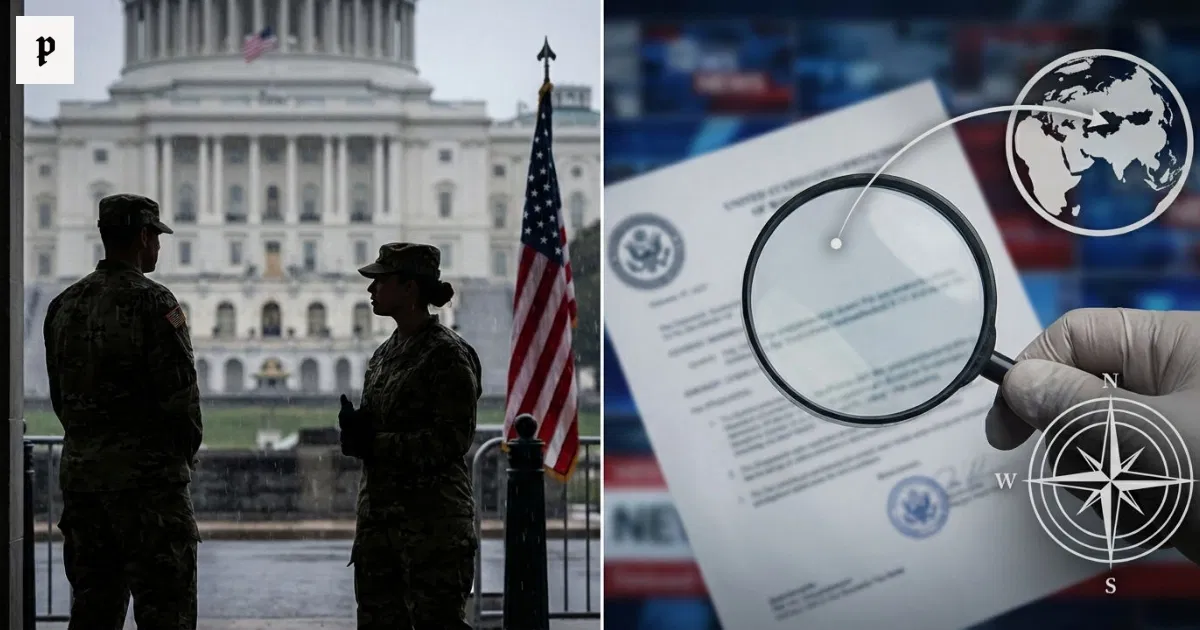
The shooting of two National Guard members near the White House on the eve of Thanksgiving shocked Washington, sparked a fresh wave of debate about security and U.S. immigration policy, and raised the possibility of a terrorist attack.
The FBI has opened a terrorism investigation into the shooting, the agency’s head Kash Patel said, and multiple search warrants have been issued, including for the suspect’s most recent residence. People found at the home are being questioned. Patel also confirmed the suspect had links to allied forces.
As authorities work to determine the suspect’s motive, officials and politicians face key questions: how Afghan resettlement programs may have influenced the case; what protective measures National Guard troops deployed in urban settings have; and whether the mission that sent them to the capital was properly planned.
President Donald Trump called the incident an “act of evil and terrorism” within hours and used it to press his immigration agenda. Trump, speaking from his Mar-a-Lago resort in Florida, quickly shifted from expressing sympathy for the victims to blaming the Biden administration for allowing the alleged attacker into the United States after the 2021 troop withdrawal. He said the incident “underscores the greatest national security threat our country faces.”
Trump described the suspect as an Afghan national and accused the Biden administration of bringing him into the country after the U.S. withdrawal. He also made politically charged attacks on Somali migrants in Minnesota despite no apparent connection to the Washington shooting, claiming they “exploit our country” and denigrating Somalia.
Full details of the Washington incident remain unknown.
Vetting of Afghan migrants and security gaps
Questions are likely to arise about vetting of Afghan migrants—many of whom arrived during the Biden administration after assisting U.S. forces. Although the precise facts of Wednesday’s shooting are not yet clear, the FBI has long warned of the risk that self‑radicalized individuals from immigrant communities can be inspired by groups like ISIS or online propaganda to carry out attacks on U.S. soil.
Attention may also turn to any subsequent immigration processes involving the suspect that continued into the Trump administration. Critics argue that intelligence and security services may have been weakened or had resources diverted amid political fights over immigration enforcement, raising questions about whether any lapses occurred before Wednesday’s shooting.
Politically, Trump sought to shape the resulting debate. He promised to “re‑review every foreigner” who arrived from Afghanistan—statements that could alarm lawful Afghan migrants, many of whom aided U.S. forces and diplomats at great personal risk.
Some observers suggested Trump’s remarks also aimed to counter suggestions that the National Guard troops patrolling Washington in uniform were left vulnerable by an ill‑defined mission.
Political fight over National Guard deployments
A political storm has swirled around the National Guard since Trump ordered Guard units deployed to certain U.S. cities. The debate over the Guard’s role and the broader effort to militarize law enforcement has intensified following what officials described as a “targeted attack” on the eve of Thanksgiving.
The Washington shootings were the latest in a year marked by shocking public violence. The attack struck especially hard in West Virginia, one of several states that sent volunteer Guard members to the capital.
For Guard troops on the capital’s streets that evening, the shootings raised immediate and painful questions about their safety and protection while serving. National Guard members deployed to Washington were noted for their professionalism and demeanor, but their visible military uniforms — likely intended by Trump as a deterrent — may also make them more exposed.
Homeland Security identified the suspect as Rahmanullah Lakanwal. Officials familiar with the investigation said the initial identification appears to match a man from Washington state who seems to have migrated to the U.S. from Afghanistan in August 2021. That possibility raises counterterrorism concerns about whether the alleged attacker sought to target U.S. soldiers and whether others might carry out similar acts. U.S. forces withdrew from Afghanistan in August 2021.
In response, the administration doubled the Guard deployment to the capital. Trump asked Defense Secretary Pete Hegseth to mobilize 500 additional Guard members. The government also filed an emergency court order seeking to keep National Guard troops in the city after a federal judge last week ordered their removal pending appeal.
Controversy over domestic use of the Guard
The original Guard deployment to Washington was highly contentious and part of a broader strategy that sent troops to other cities, including Los Angeles. Critics warned the mission was unnecessary and authoritarian, alleging it violated the limited home rule of the District and federal laws that restrict the use of the military for domestic law enforcement except in the most extreme circumstances. Washington officials sued the federal government, arguing the deployment risked undermining local authority and could heighten tensions.
A federal judge, Jia Cobb, recently ruled that the Guard had been deployed unlawfully in Washington and said there was a “significant risk” their presence could lead to dangerous or deadly confrontations that would harm public safety. She stayed her ruling for 21 days to allow the government to appeal.
Now that Guard members themselves were victims of an attack, Democrats and others are likely to intensify criticism of Trump’s decision to deploy troops. Some lawmakers expressed shock and sympathy for the Guard but questioned whether additional mobilization was the right response, saying security decisions should rest with local officials.
Officials characterize the incident as a “targeted” attack; investigators will seek to determine whether the Guard members were deliberately selected or were random targets—an outcome that will shape policy reactions.
Former Washington police chief Charles Ramsey warned the Guard may not be trained for policing duties: “You have put National Guard soldiers in a difficult position… serving as police officers is not what they are trained for,” he told CNN. Others stressed the need for a clear mission and adequate protection for Guard personnel.
How the suspected attacker came to the U.S.
Officials said the suspect accused in the attack entered the United States through a Biden‑era Afghan resettlement program called “Operation Allies Welcome,” Homeland Security Secretary Kristi Noem said Wednesday night. Former President Joe Biden launched Operation Allies Welcome in August 2021 to protect vulnerable Afghans after the U.S. military withdrawal and the Taliban takeover.
Noem said the suspect, identified as Rahmanullah Lakanwal, arrived in the U.S. on September 8, 2021. He applied for asylum in 2024 and was granted it the following year under the Trump administration, law‑enforcement officials told CNN.
Most Afghans who arrived under Operation Allies Welcome were allowed to enter and remain in the U.S. for two years without permanent immigration status. More than 40% of those admitted under the program were eligible for Special Immigrant Visas (SIVs) because they had taken significant risks to help the U.S. or were family members of those who did, according to the Department of Homeland Security. The program was later renamed and refocused toward longer‑term pathways for Afghans with SIV eligibility and through the existing U.S. refugee resettlement program.
According to the State Department, more than 190,000 Afghans have been resettled in the U.S. under Operation Allies Welcome and follow‑on programs.
The resettlement issue has become politically sensitive, and processing delays have left thousands of vulnerable Afghans in limbo in third countries such as Pakistan. Shawn VanDiver, president of AfghanEvac (an organization that helps resettle Afghans), told CNN roughly 260,000 Afghans have applied to come to the United States and are still waiting; many remain in Afghanistan facing Taliban persecution.
On Wednesday, President Trump accused the Biden administration of allowing “20 million unknown and unchecked foreigners” into the U.S. and called for a review of every person who migrated from Afghanistan during Biden’s presidency. The U.S. Citizenship and Immigration Services (USCIS) posted on X that it would pause processing all Afghan‑related immigration cases “indefinitely, pending further review of security and vetting protocols.”
Since taking office in January, Trump has enacted sweeping changes to U.S. refugee and international aid policies, measures that CNN reported have cut critical resources for many Afghans who helped the U.S. during the war.
Officials and experts say all Afghans evacuated after the fall of Kabul underwent security checks by intelligence, law‑enforcement, and counterterrorism professionals—some were screened multiple times before leaving Afghanistan and again in transit countries en route to the U.S. CNN reported earlier in the week that the Trump administration had already begun a re‑review of Afghans resettled in the United States.
VanDiver urged the public not to demonize all Afghans based on the alleged actions of one person, noting that many Afghan families in the U.S. are not troublemakers or terrorists.