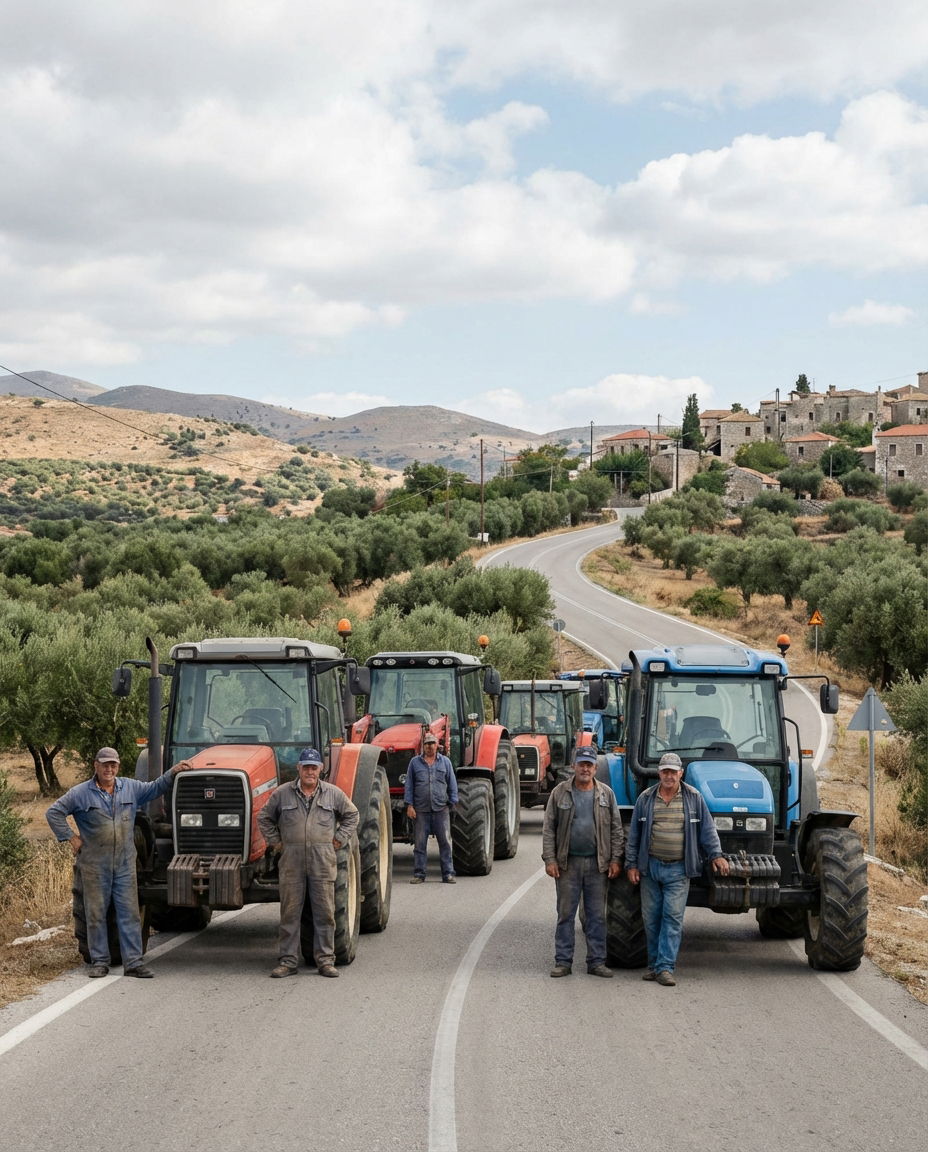
Greek farmers with tractors blocking a rural road during protests.
Rising Pressure As Government Seeks Unified Talks
The Greek government is moving through a marathon of internal meetings as it attempts to shape a single negotiation package for farmers who have intensified protests across the country. Regions like Crete and Thessaly have become flashpoints, marked by injured police officers, extended flight delays after airport blockades in Chania and Heraklion, and even plans to shut down the port of Volos. Officials describe the situation as increasingly strained.
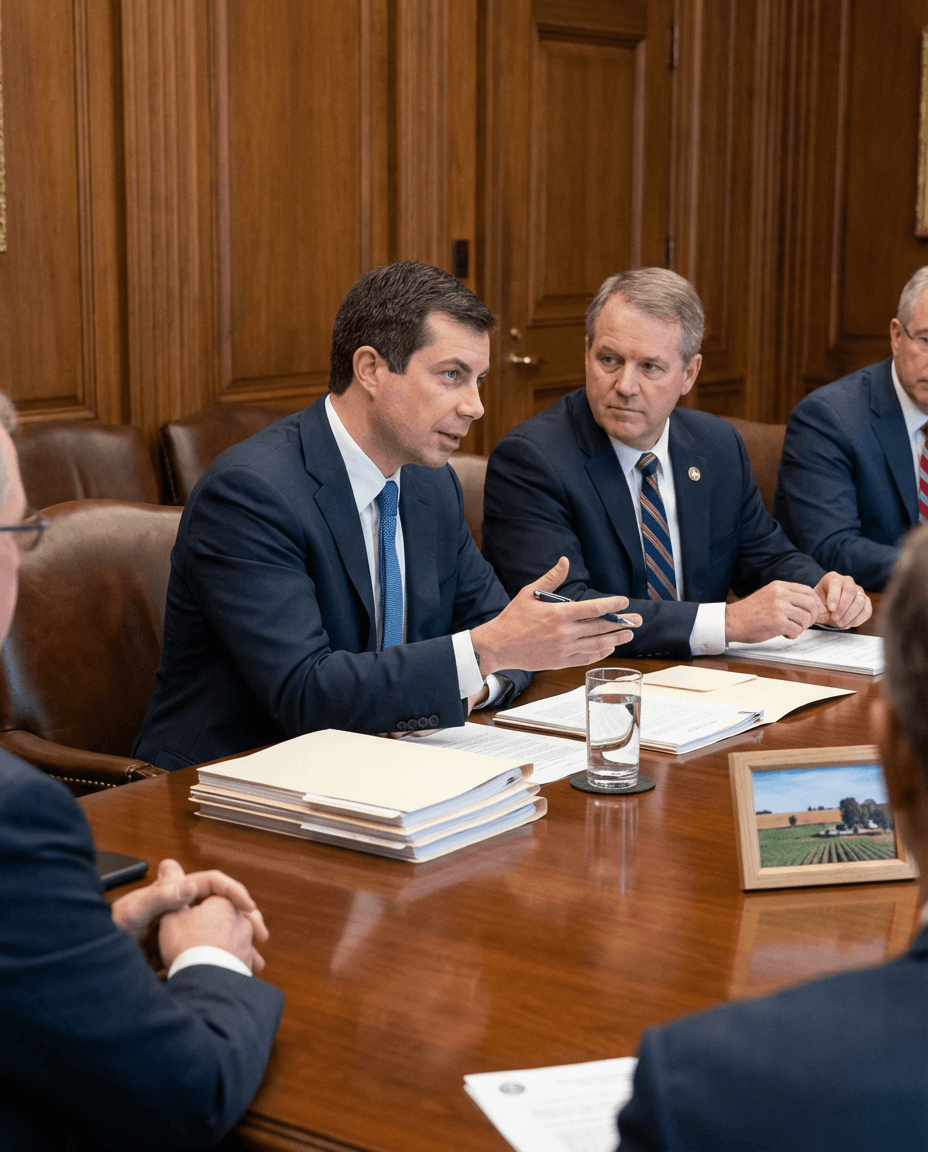
Government officials discussing coordinated negotiation strategy.
Government sources stress that negotiations will only cover issues affecting farmers nationwide, not local or regional concerns. The prime minister has insisted that any discussion requires a unified national representation with clear, consolidated requests. Until such a representative body exists, there will be no formal negotiation.
Farmers, for their part, are working rapidly to create a national body that will represent them in upcoming talks. A key meeting in Nikaia is expected to determine who will sit at the negotiation table. At the same time, protest organizers are planning stronger demonstrations, including new blockades at ports, airports, and major highways. Their goal is to increase pressure as the country approaches the heavy holiday travel period.
Subsidies, Delays And Bureaucratic Strains
The government has promised that delayed subsidies will soon be disbursed. According to officials, these delays stem from changes within OPEKEPE’s digital systems, as well as ongoing audits involving thousands of farmer tax numbers. These system updates have temporarily excluded many farmers from receiving payments, fueling anger at protest sites and adding urgency to the discussions.
Debates Over Production Costs And Energy Prices
Inside government circles, one of the main topics under review is the rising cost of agricultural production. Farmers argue that mounting expenses have made it nearly impossible to sustain operations, and energy prices sit at the center of their grievances.
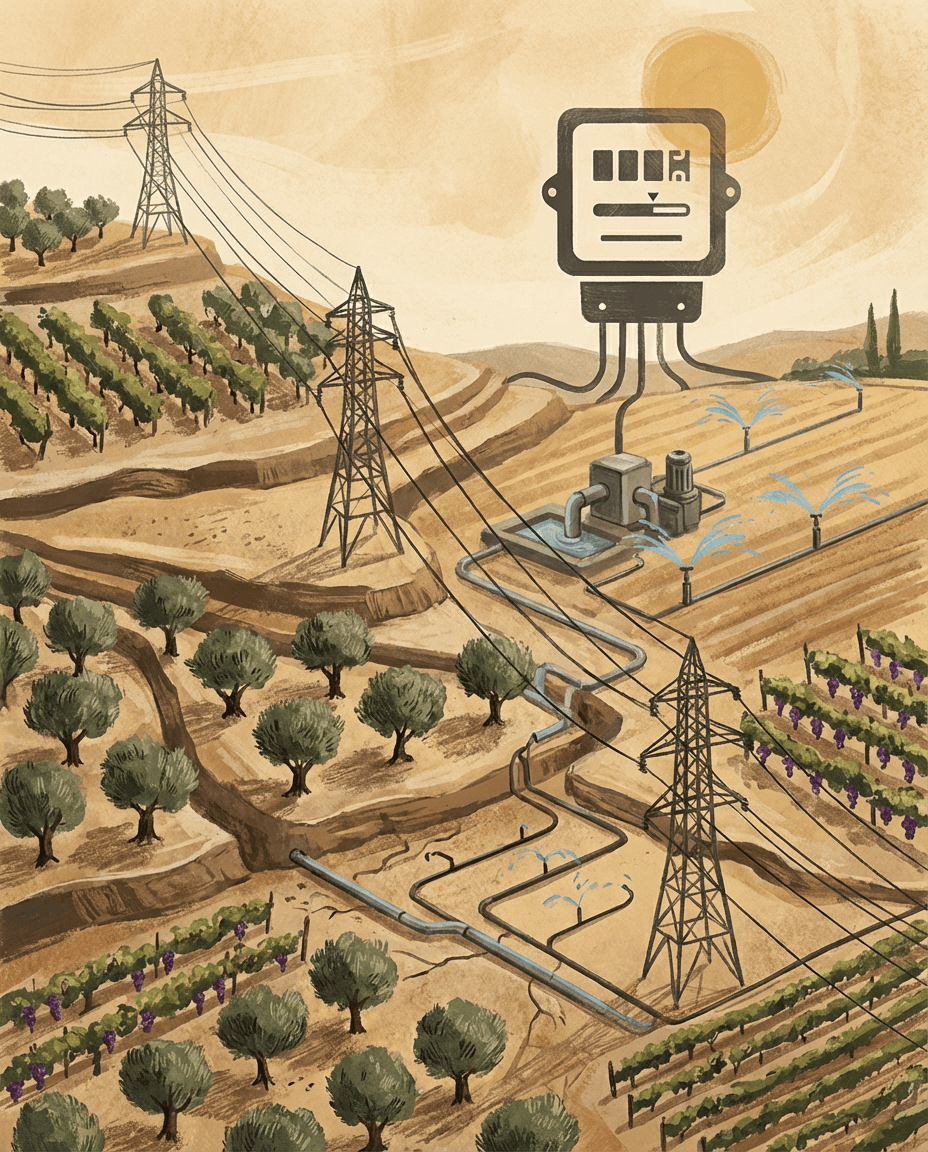
Energy costs remain a central issue for farmers.
The current electricity price for agricultural use stands at 9.2 cents per kWh, just above cost. Farmers are demanding a reduction to 7 cents, but say they would accept 8 cents as a compromise. The government argues that 8 cents remains unsustainable, since average production cost hovers around 9 cents per kWh.
Talks also include the possibility of further intervention in agricultural diesel refunds. Farmer representatives want higher refunds, though government officials suggest such increases may not be feasible.
Beyond energy costs, many farmers are struggling with severely low product prices. Durum wheat production, for example, yields only 7 euros per stremma. This has prompted calls for minimum guaranteed producer prices, a demand the government considers unrealistic.
With tensions rising and demonstrations expanding, the coming week is widely seen as a critical window for reaching a compromise that could clear the blockades before holiday travel peaks.