


Main illustration of inflation trends
Greeces Inflation Holds Firm As Everyday Costs Climb
Greeces inflation rate for November 2023 landed at 2.4 percent, keeping the country a touch above the Eurozone average of 2.4 percent. The figures from Eurostat paint a familiar picture for Greek households where essentials continue to weigh heavily on budgets.
Housing And Food Continue To Tighten Household Budgets
Rents and food prices remain the main drivers behind the persistent pressure on consumers. Data from ELSTAT shows that these two categories continued to surge through November placing significant strain on purchasing power.
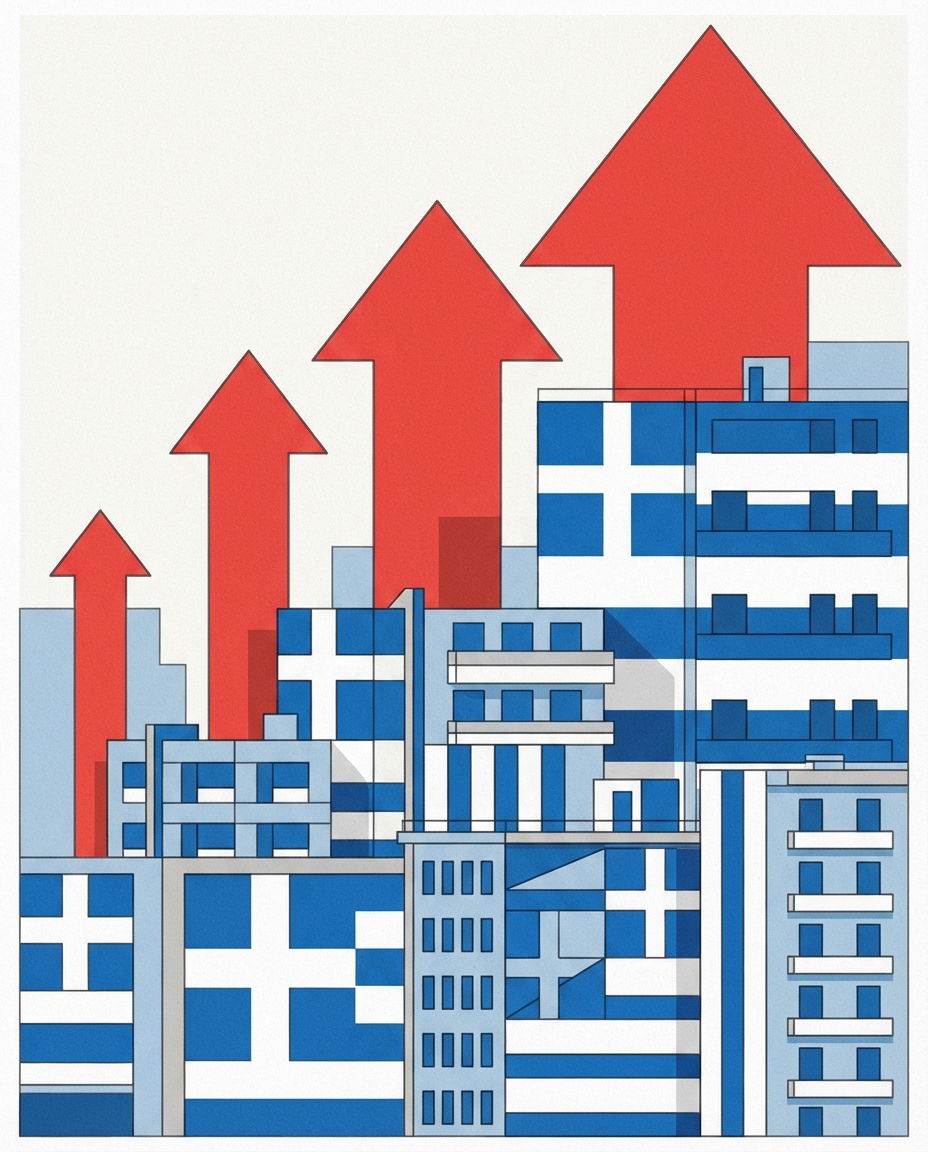
Housing rental costs rising across Greece
Housing rent prices saw a sharp rise of 8.6 percent while the overall food category recorded an increase of 9.2 percent. Within food items the following increases stood out:
Bread and cereals 4.1 percent
Meat 5.7 percent
Fish 4.3 percent
Dairy and eggs 11.8 percent
Oils and fats 15.9 percent
Fruits 15.1 percent
Vegetables 7.2 percent

Food prices remain on an upward trend
Eurozone Inflation Slows But Differences Remain
Across the Eurozone inflation eased to 2.4 percent in November down from 2.9 percent in October. A year earlier the rate had been dramatically higher at 10.1 percent while Greece had recorded 8.8 percent.
Within the wider European Union annual inflation reached 3.1 percent in November compared to 3.6 percent in October and 11.1 percent the previous year.
The lowest annual inflation rates were observed in:
Belgium 0.8 percent below zero
Denmark 0.3 percent
Italy 0.6 percent
The highest annual inflation rates were recorded in:
Czechia 8.0 percent
Hungary 7.7 percent
Slovakia 6.9 percent
Compared to October annual inflation fell in 20 EU member states stayed unchanged in one and rose in six.