
“2025 showed us that cooperation, planning, prevention, training and operational readiness are not just words on paper — they save lives,” said Climate Crisis and Civil Protection Minister Giannis Kefalogiannis in a speech at an event held at the Stavros Niarchos Foundation Cultural Center presenting the AIGIS programme and the review of the 2025 fire season.
Key points from the minister’s presentation and the event:
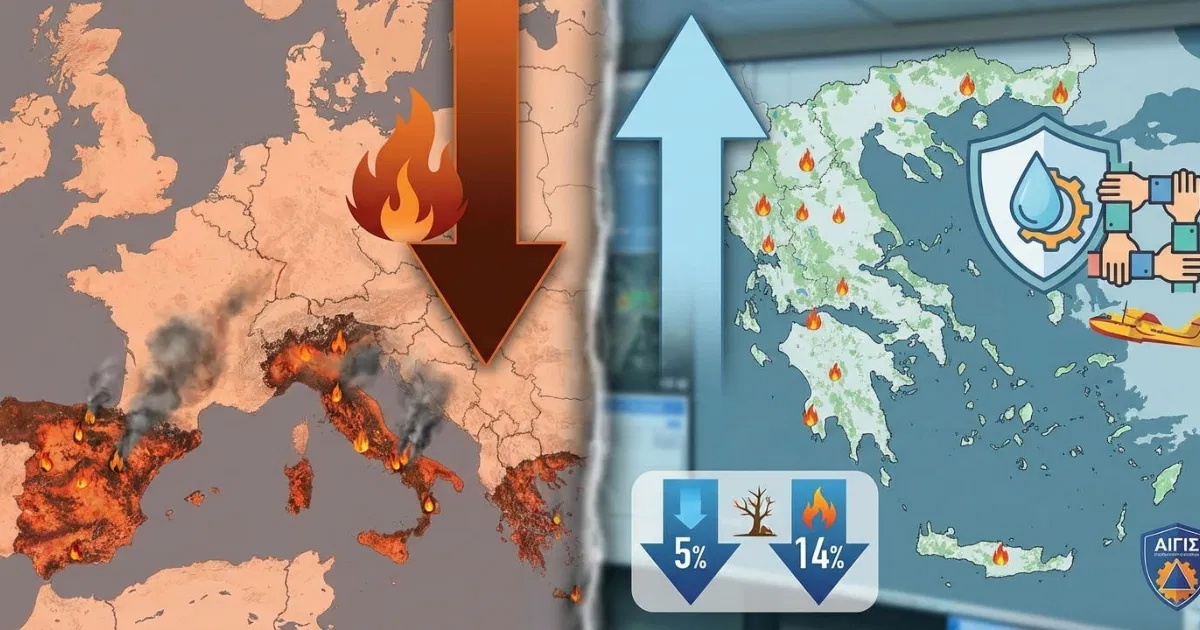
European context: Minister Kefalogiannis reported that burned areas across Europe exceeded 10.3 million stremmata in 2025, marking the worst performance since 2006. Mediterranean countries such as Spain, Portugal and Italy saw burned areas multiply, while northern states including Denmark, Germany, Norway and the Netherlands recorded up to eightfold increases compared with previous years (as stated by Kefalogiannis at the event).
Greece’s performance: Despite the difficult continental context, Greece showed “a differentiated trend”: a 5% reduction in burned area and a 14% drop in the number of fires compared with the 20‑year average. The minister said these figures demonstrate that combined prevention, surveillance and timely operational response are producing results.
Nine major wildfires: The year’s nine large fires included incidents on Chios (twice), Feneos, Kythera, Zakynthos, West Achaia, Preveza–Arta, Keratea and Pissona in Evia. Analysis presented at the event found an interesting pattern:
Average burned area per large fire over 2005–2024 was roughly 58,000 stremmata.
In 2025 that average fell to about 29,000 stremmata — nearly 50% smaller.
At the same time, 2025 saw roughly 50% more large wildfires than the 2005–2024 average. In other words: more large fires occurred, but each one on average burned a smaller area than in past years (comments attributed to Kefalogiannis).
Peak operational pressure: Minister Kefalogiannis singled out 12 August as the most demanding operational day of the year — 86 simultaneous fires nationwide, four of which developed into large fires. He described the day as a “real stress test” for the National Operations Centre, with firefighting forces deployed from Thrace to Crete.
Causes of fires: A substantial portion of ignitions were attributed to negligence: burning of residues, field clearing, and agricultural or rural work that are high‑risk under current climatic conditions. For deliberate arson, the minister stressed the deterrent effect of arrests and pretrial detentions, noting a high number of detentions for a second consecutive year.
AIGIS programme and operational reinforcement: Fire Service Chief Lieutenant General Theodoros Vayias presented equipment deliveries made through the Recovery and Resilience Fund under the AIGIS programme. He reported that, to date, equipment and assets worth more than €55 million have been delivered, 90% of them funded via the Recovery and Resilience Facility. Vayias added that by May 2026 additional assets and materials valued around €255 million will have been delivered, primarily through European resources and largely via the Recovery and Resilience Fund. Deliveries include new aerial and ground assets, surveillance systems, personal protective equipment, vehicles, air‑transportable unit infrastructure and modern operational tools to strengthen the Service’s readiness and resilience.
Honours and awards: The ceremony concluded with honorary distinctions awarded to members of the Fire Service, the Armed Forces, the Hellenic Police, the Coast Guard, the National Centre for Emergency Care (EKAV), the Forestry Service, volunteer teams and others who contributed effectively during the season. The awards highlighted the work and often selfless service of personnel operating under demanding conditions.
Attendance: Present at the event were Deputy Minister Kostas Katsa phados (responsible for State Aid), Deputy Minister of Shipping Stefanos Gikas, Secretary General of Civil Protection Nikolaos Papaefstathiou, Secretary General for Natural Disaster Rehabilitation Petros Kampouris, Secretary General of Forests Stathis Stathopoulos, senior military and emergency leaders (including representatives of the Armed Forces, the Hellenic Air Force and Navy), senior Fire Service officers, programme implementers of AIGIS and family members of the awardees.
The presentations and statistics at the SNFCC event emphasized both the severe European wildfire season of 2025 and Greece’s relative improvement through prevention, surveillance and strengthened operational capacity backed by the AIGIS investments.