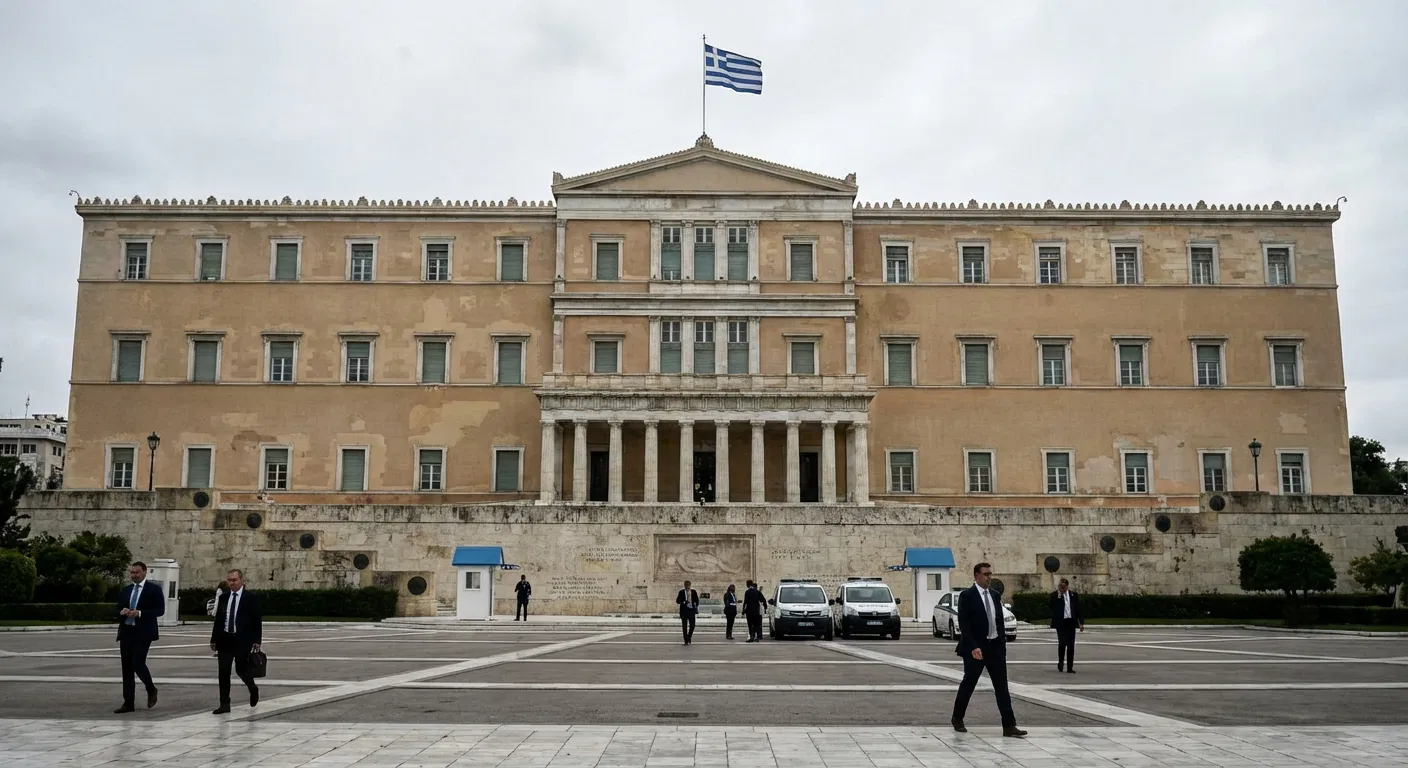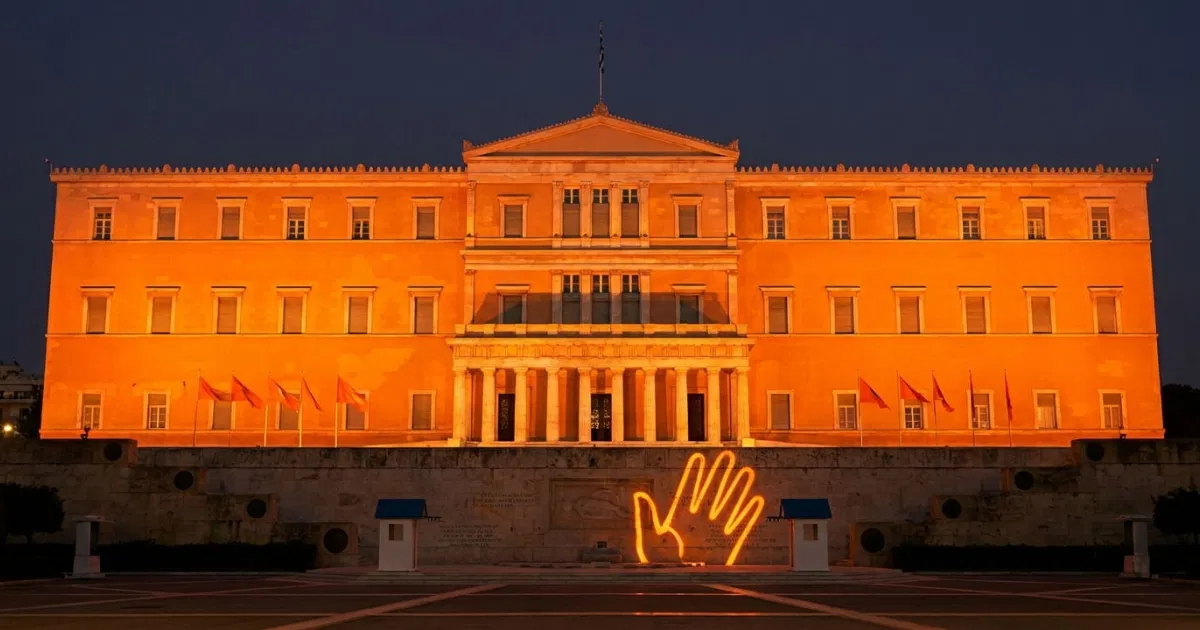

On the evening of 25 November 2025 the Hellenic Parliament building was illuminated orange as part of the UN “Orange the World” campaign to mark the International Day for the Elimination of Violence against Women. The lighting was presented as a strong message condemning all forms of violence and reaffirming a commitment to equality, respect and solidarity with women who are victims of violence.
Officials said the symbolic action aimed to remind the public that no woman is alone and that ending gender-based violence is a responsibility shared by the whole of society — the state, institutions and citizens. The Parliament pledged to keep that reminder alive and to help create an environment in which every victim feels safe to speak up and seek help. The statement reiterated that violence has no place in a democratic society and must be condemned in all its forms.
Alarming global figures and local obstacles
Despite significant efforts in recent years, recorded incidents of gender-based violence in Greece and across Europe continue to rise. According to a recent World Health Organization study, nearly 1 in 3 women worldwide — roughly 840 million women — have experienced intimate partner violence or sexual violence at least once in their lifetime (WHO). The article notes that many women, even in 2025, still hesitate to report violence because of fear, social pressures or a lack of trust in institutional mechanisms.
For these reasons, continuous training of relevant services and strengthening of support structures were highlighted as critical priorities to reduce and ultimately eliminate the phenomenon.
Demonstrations in central Athens: “We are not all here — the murdered are missing”
A mass rally and march took place in central Athens on 25 November to mark the day. Large numbers of demonstrators — women and men, feminist organizations, unions, collectives and students — gathered first at Klafthmonos Square and marched toward the Parliament, concluding at the Propylaea.
Chants denounced state indifference and systemic violence. One of the most repeated slogans was: “We are not all here — the murdered are missing,” a reference to victims of femicide in Greece. Protesters also shouted slogans directly criticizing political responsibility, for example: “State, violence, femicides — the government’s murders.”
Organizers, including the Movement for the March 8 Strike and other collectives, said this year’s 25 November was not only a day of remembrance but of struggle. They argued that gender-based violence is linked to broader economic and social conditions, asserting that global capitalist crisis fuels war, racism, sexism, poverty and destruction, and that sexism is used as a tool for greater oppression and division of the working class.
The demonstrations also drew attention to cuts and understaffing in social services, the shrinking of public education, low wages and high cost of living — factors the protesters said worsen women’s vulnerability to violence.
The march ended peacefully at the Propylaea, while some blocs moved toward Gladstonos Street, the site where Zak Kostopoulos was killed, to mark that incident as part of the broader struggle against violence and impunity.