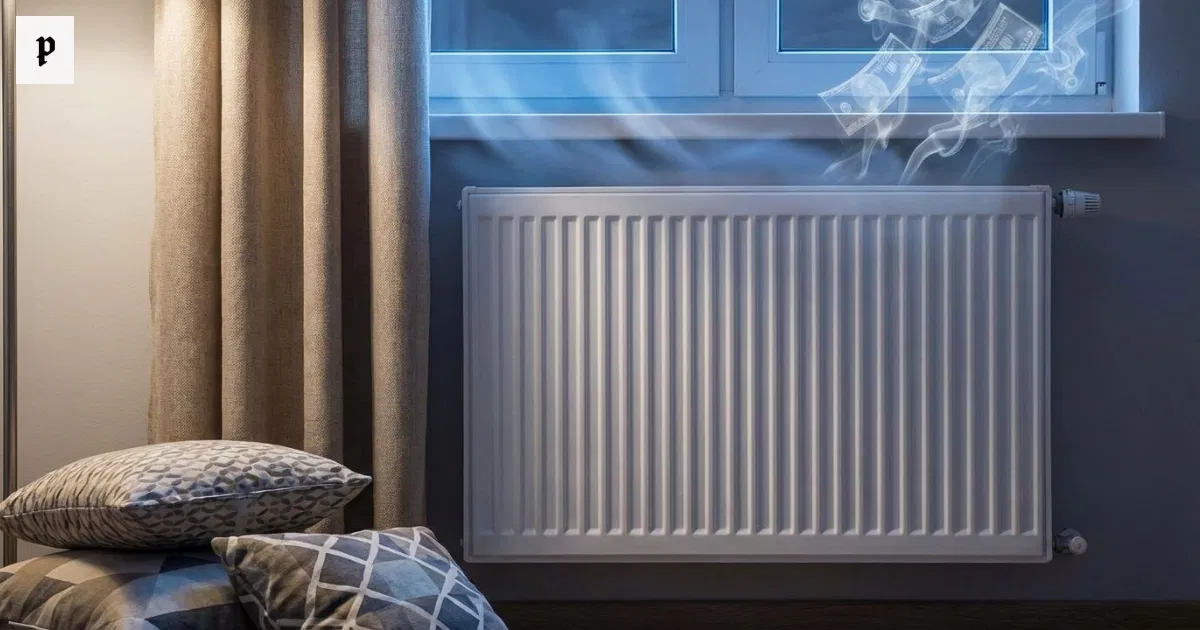

Heating: The 8 Radiator Mistakes That Drive Up Your Bill
Small daily habits and incorrect settings can increase heating consumption by up to 20%. While unseasonably warm weather can delay turning radiators on, cold regions already run heating many hours a day. With a few simple adjustments you can cut waste caused by poor settings, inadequate maintenance, or even decorative items placed on radiators. Below are the most common mistakes and how to avoid them.
1. Don’t “hide” radiators
Placing furniture (sofas, tables, shoe racks, etc.) in front of radiators traps heat and prevents it from circulating into the room. Radiators then need to run longer to reach the same temperature.
Tip: Keep at least 30–40 cm of free space in front of each radiator.
2. Be careful with thermostat temperature
Many people set the thermostat to 23–24°C thinking they’ll feel more comfortable, but higher settings can sharply increase energy use without significantly improving comfort. Under normal conditions, the economical and healthy range is about 17–21°C. Experts say every extra degree raises consumption by roughly 6%–8%.
Tip: Set the thermostat to around 20°C and make small adjustments up or down based on your home’s characteristics.
3. Don’t neglect boiler maintenance
Skipping regular (annual) professional maintenance and flue-gas checks reduces system efficiency and can increase energy consumption by 10%–20%.
Tip: Schedule maintenance and flue-gas inspection once a year before the heating season.
4. Radiators full of air
If you hear gurgling or parts of a radiator are cool to the touch, air is trapped in the system. That causes significant heating losses.
Tip: Bleed all radiators once at the start of the season and whenever symptoms appear.
5. Wrong use of programming
Many use long on–off cycles (e.g., 3 hours on, 4 hours off). Repeated abrupt shutdowns and restarts force the boiler to work harder each time.
What to do: Prefer a steady temperature with small fluctuations—this is more efficient.
6. Heat losses from poor insulation
No matter how modern the heating system, drafts and gaps let cold air in and undermine efficiency.
Tip: Use sealing tape, double curtains, shutters—seal gaps and reduce drafts around windows and doors.
7. No… doilies or coverings
Radiators rely on hot air circulation. Covering them with decorative items, towels, or fabrics blocks heat flow and reduces system performance.
Tip: Remove anything that covers radiators or blocks the airflow.
8. Constantly switching radiators on and off
Frequently turning radiators on and off and leaving them running all day adds unnecessary cost. How long radiators should run depends on insulation:
With good insulation: 1.5–3 hours of continuous heating per day can be enough to keep the home at a comfortable temperature.
With moderate insulation: 3–5 hours total (morning and evening) covers most homes.
Older, poorly insulated homes may need longer operation, but increase temperature gradually—don’t blast the thermostat.
Summary: Keep radiators unobstructed, maintain the boiler annually, bleed radiators when needed, avoid large on/off cycles, set the thermostat sensibly (around 20°C), and improve insulation to cut heating consumption and lower your winter bills.