
A Veteran Statesman Sounds the Alarm
Speaking with the calm but unwavering tone of a political elder who has seen cycles of crisis come and go, former Greek Prime Minister Kostas Karamanlis delivered a sweeping critique of the government. He focused on how it has handled the surveillance scandal, the OPEKEPE controversy, and the unrest among farmers, framing all of it as part of a broader democratic decline.
He warned that Greece, like much of Europe, is facing what he called a crisis of delegitimization. According to him, democracies do not falter simply because institutions exist. They falter when citizens stop believing those institutions work as they should. And today, he argued, an ever expanding share of society feels exactly that.
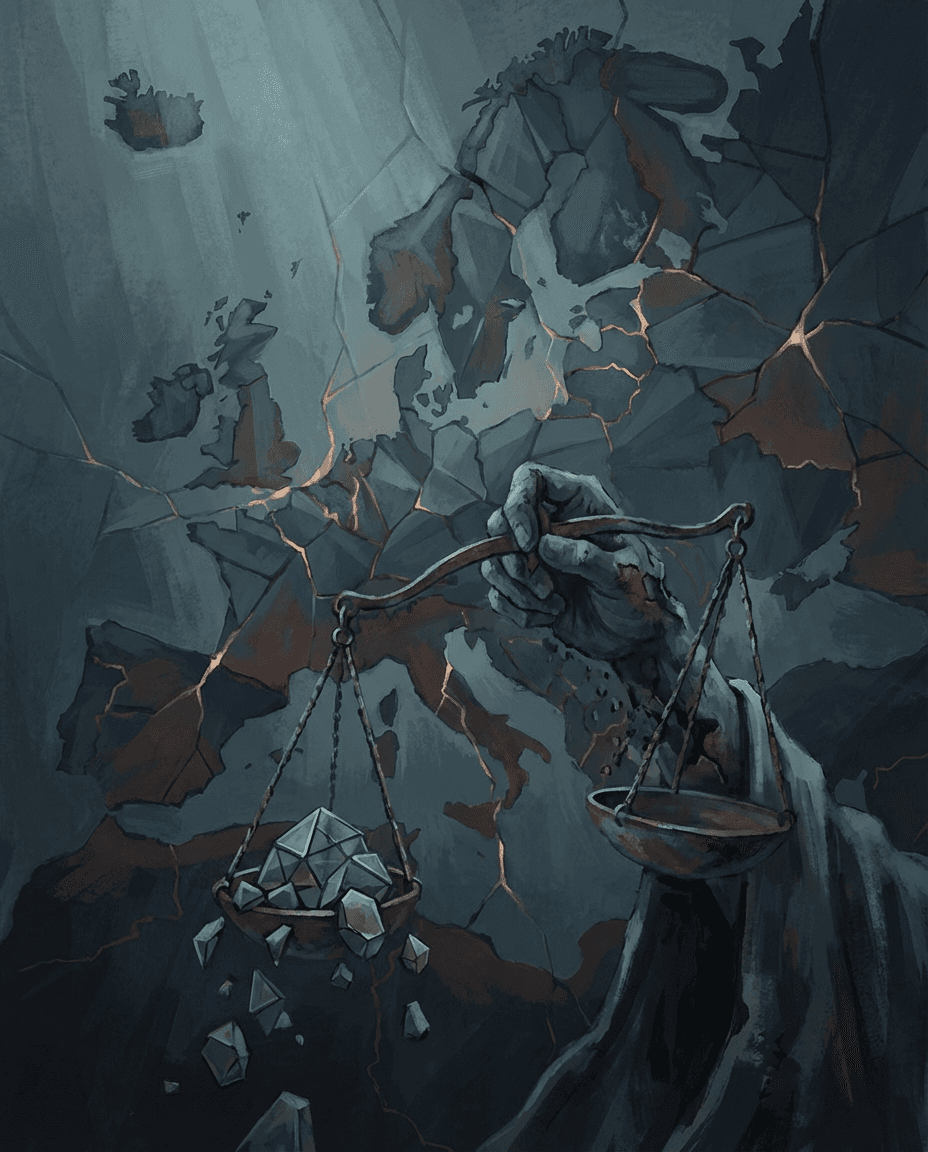
Conceptual illustration symbolizing a crisis of democracy in Europe.
Europe’s Post War Foundations Under Strain
Karamanlis emphasized that Europe’s post war democratic calm was built on economic growth and the distribution of prosperity across broad social groups. Those pillars, he said, no longer exist in the same form. Distorted globalization, the dominance of anonymous markets, rigid fiscal rules, a shrinking welfare state, and worsening inequality have all eroded the social contract that once supported political stability.
He noted that while traditional political parties steered Europe for 60 years with moderation and predictability, they are now weakening or disappearing. In their place, sharper and sometimes extreme voices are rising. For Karamanlis, this shift is not the product of reckless political behavior, but of deep social frustration among people who feel abandoned by those they once trusted.
The decline of political discourse, he warned, mirrors this upheaval. Toxic tones, slogans replacing arguments, and communication driven politics are adding further pressure to an already strained democratic system.
Shadows Over Institutions of Justice
The former prime minister expressed particular concern about how parliamentary investigative committees have operated in recent years. Their increasingly superficial nature, he argued, diminishes the credibility of Parliament itself. Small deviations from democratic norms accumulate, he said, and slowly corrode the quality of the political system.
He also pointed to the handling of the surveillance scandal. The judicial investigation into phone monitoring of political leaders, ministers, senior military officials, journalists, and others left major questions unanswered. Although public attention has since moved on, he said that for most citizens the doubts remain, casting a long shadow over trust in the justice system.
Conceptual illustration symbolizing fractures in democratic institutions and public trust.
The Responsibility of Public Speech and the Press
Karamanlis lamented the degradation of public debate, which he believes has turned into a spectacle driven by communication strategy rather than substance. Argumentation is being replaced, he said, by noise, exaggeration, accusations, insults, and conspiracy theories. This trend strips public speech of its meaning and its ability to illuminate problems and guide solutions. Democracy, he stressed, requires seriousness, moderation, and responsibility.
He closed with a pointed message for the media. Accurate and impartial information, he said, is essential for real democratic choice. When the press serves interests instead of citizens, democracy weakens. No agenda, he insisted, is more important than the truth. The duty of journalism is not to flatter power, but to scrutinize it rigorously, wherever it resides.