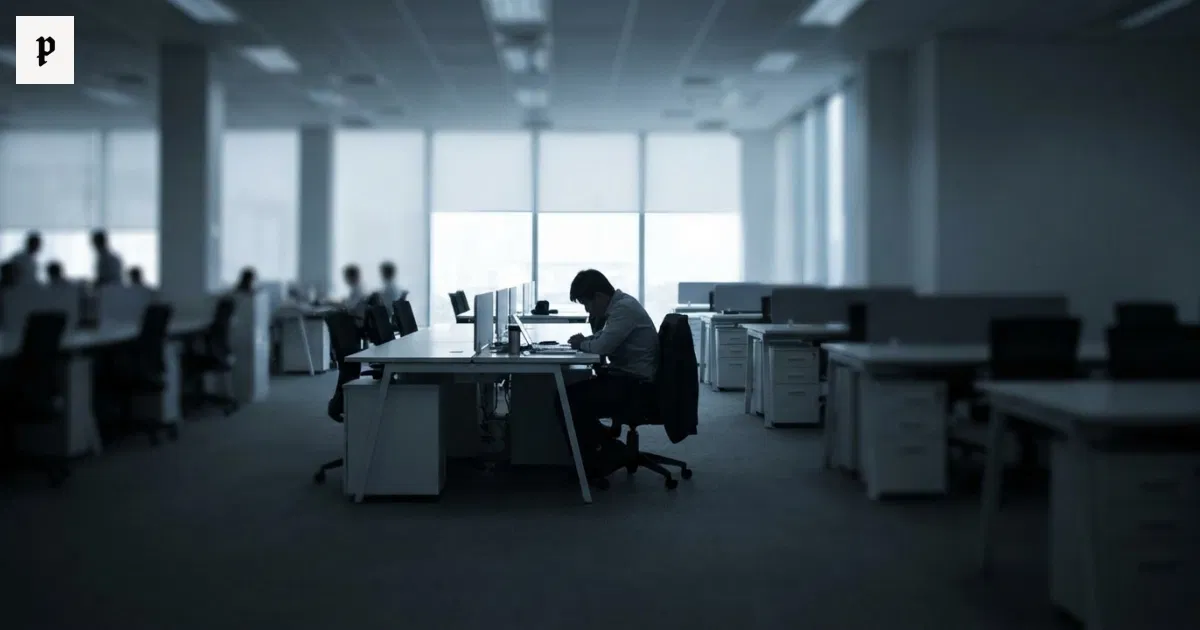


Office worker sitting alone in a modern workplace, conveying emotional isolation.
The Quiet Weight Of Not Being Seen At Work
I spend my days wandering the halls of many offices. Not as a manager or a consultant, but as a kind of quiet observer of human moods. The thing I notice most is something you cannot easily measure or graph. It is the loneliness that follows people even when they are surrounded by colleagues.
Workplaces are busy hives filled with conversations, deadlines, and constant movement. Yet a surprising number of people drift through these spaces feeling completely unseen. It is not the loud kind of problem with alarms or sudden collapses. It is a whisper that settles into the background of a workday.
You can catch glimpses of it in the person who keeps conversations short, the one who always eats alone, or the colleague who seems perfectly fine but feels strangely adrift beneath the surface. Loneliness rarely announces itself. It moves quietly.
This feeling has nothing to do with how many people sit beside you. It is tied to whether you feel supported, acknowledged, or valued. I have seen it appear in toxic workplaces where mistrust spreads quickly, but I have also seen it in warm, supportive offices where no one intends harm.
The truth is that even friendly teams can make someone feel like a spectator instead of a participant. Inside jokes, quick chats, shared lunches these tiny social currents can leave someone feeling like they are watching a world they are not fully part of.

Remote worker alone at a home desk lit by a computer screen, symbolizing digital distance.
Researchers call one of the causes the belonging gap. Humans look for signals that they matter that someone hears them, sees them, values their presence. When those signals are faint, the mind reacts as if something essential is slipping away. Worry creeps in. Self doubt grows. You start guessing at imaginary mistakes.
Remote work adds another layer to this. I have visited countless digital spaces made of glowing screens and tidy desk setups. The work gets done. Messages fly back and forth. Meetings start on schedule. Yet people often tell me that something feels thin about these connections, like they are part of a team only in theory.
And when the workday ends, loneliness does not stay behind on the office chair. It follows people home. It shapes how much energy they have left for family. It makes them feel guilty when they come home too drained to do anything else.
Loneliness is not a sign of weakness or failure. It is a human signal. It simply means a person needs connection, the same way hunger signals a need for food.
One of the most powerful remedies I have seen is something beautifully simple: micro connections. These small moments change everything. Someone asks how your morning is going and actually listens. Someone says thank you with sincerity. Someone glances up and gives a warm nod when you step into the room.

Two coworkers sharing a small friendly interaction representing micro connections.
Leaders and teammates both have the power to make workplaces feel more human. Cameras switched on for a moment. A few friendly updates before a meeting. An invitation to lunch. These gestures are small, but their impact ripples.
Connection is not a grand performance. It is a series of tiny decisions that say you matter. And everyone deserves to hear that in some form.
So pay attention to how you feel. Notice the energy of the people around you. Reach out when you can. And if loneliness presses into your day, remember this: you are not broken, and you are not alone in feeling this way. The next step toward connection is always within reach.