
Introduction
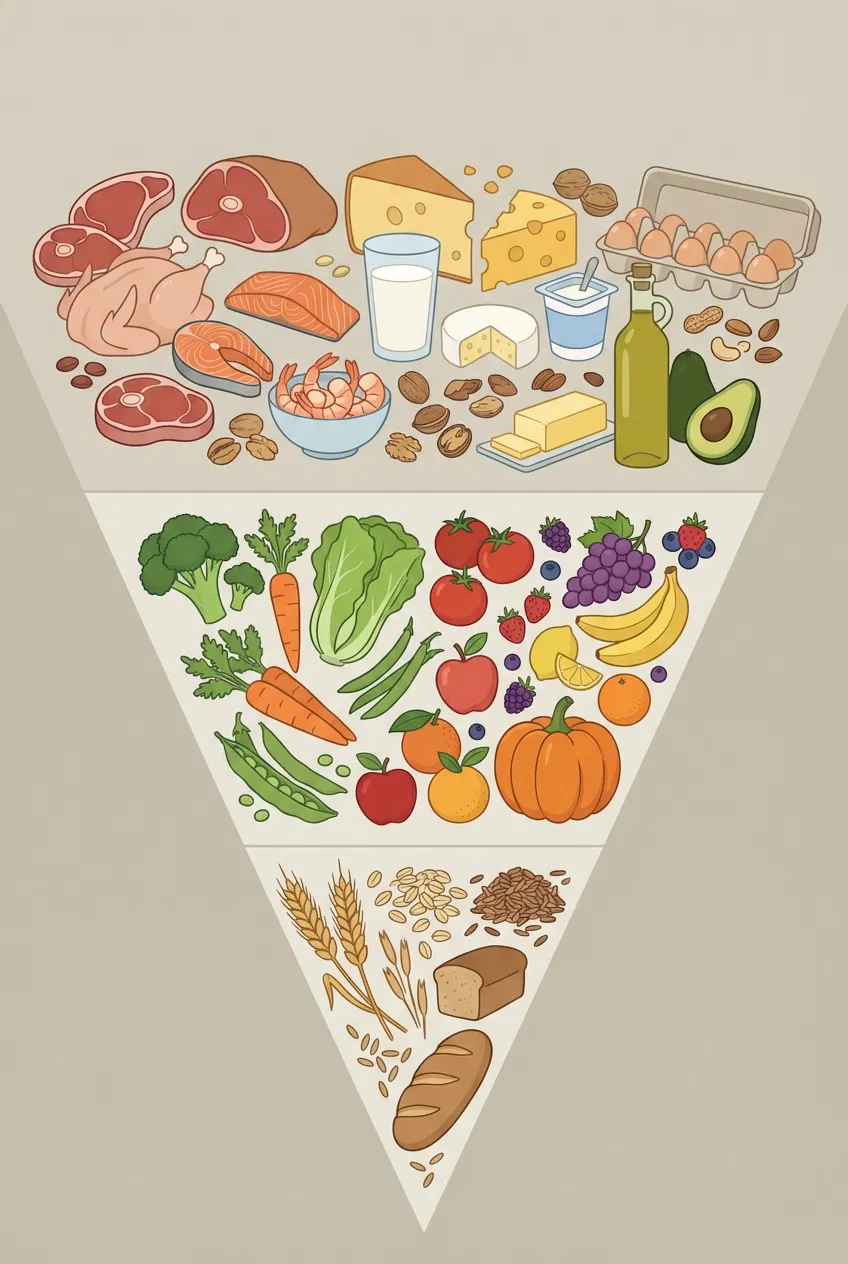
Robert F Kennedy Jr, serving as US Secretary of Health, has introduced a new set of dietary guidelines centered around an inverted food pyramid that places animal products at its peak. This reshaped model has ignited widespread discussion among nutrition experts in the United States and abroad.
Many US media outlets point out that several recommendations remain similar to previous guidelines, particularly the unchanged limits on saturated fats, despite the heavier emphasis on red meat and full fat dairy.
Greek nutrition specialist Fani Preventi notes that the pyramid’s structure is confusing, impractical, and difficult to apply within evidence based dietary planning.
Confusion Over the Pyramid
The visual layout of the pyramid assigns meat, poultry, fish, dairy, eggs, nuts, butter, olive oil and avocado to the top section, while fruits and vegetables flank the sides, and whole grains occupy a reduced position at the bottom.
Preventi highlights that this design contradicts established nutrition science by promoting foods high in saturated fat while simultaneously recommending a general reduction in saturated fat intake.
The lack of clarity creates practical difficulties for nutrition professionals, who find the numerical targets impossible to meet within a realistic eating plan.
Concerns About Applicability
Preventi explains that the pyramid appears tailored primarily to individuals struggling with obesity who aim to lose weight through diet or medical treatment.
The recommendation to raise protein consumption to 1.2 to 1.6 g per kg of body weight exceeds the needs of many people and lacks strong scientific backing for the general population.
The expert stresses that these quantities are unsuitable even for people aiming to build muscle, making the guidelines overly narrow in scope.
Comparison with the Mediterranean Diet
A comparison between the Mediterranean diet and the new American model reveals major differences. The Mediterranean pyramid places whole grains at its base, while Kennedy’s version reduces them significantly.
Daily consumption of animal products is encouraged in the American guidelines, whereas Mediterranean recommendations limit such foods to only a few times per month.
Water intake and legumes hold central roles in the Mediterranean pattern, yet both are downplayed in the US pyramid.
Public Health Context
The campaign accompanying the new guidelines uses the slogan Eating Real Food, reflecting an attempt to counter the prevalence of junk food in the US, where obesity rates have reached approximately 40.3 percent according to CDC data.
Preventi reiterates that the new pyramid does not serve the needs of the general population and risks creating the misconception that higher protein intake is universally beneficial.