
Androulakis Renews Call for Progressive Alliance on Article 86 Reform
PASOK President Nikos Androulakis renewed his appeal for a broad progressive alliance to support the revision of Article 86 of the Greek Constitution, which defines the framework for ministerial criminal liability. His intervention came during an event hosted by the InSocial Institute at the ESIEA hall, where the official dialogue on constitutional reform was launched.
Androulakis argued that the discussion is unfolding at a time of heightened pressure on liberal democracy across Europe. He highlighted a profound crisis of trust in institutions, pointing to scandals such as OPEKEPE, the wiretapping affair and the Tempi train disaster. He stated that the priority for PASOK is to end the environment of impunity that undermines democratic credibility in the eyes of the public.
The PASOK leader emphasized that revising the constitutional provisions on ministerial criminal liability must be a key focus. He claimed that the current version of Article 86 has been used by the prime minister to shield ministers, making it a mechanism that perpetuates impunity. Androulakis repeated his call for progressive political forces to unite behind a shared plan for revising the article, arguing that the next round of constitutional reform should not be exploited for tactical gains.
He also called for a stronger Parliament and for achieving genuinely independent judicial institutions as part of a broader effort to rebuild public trust.
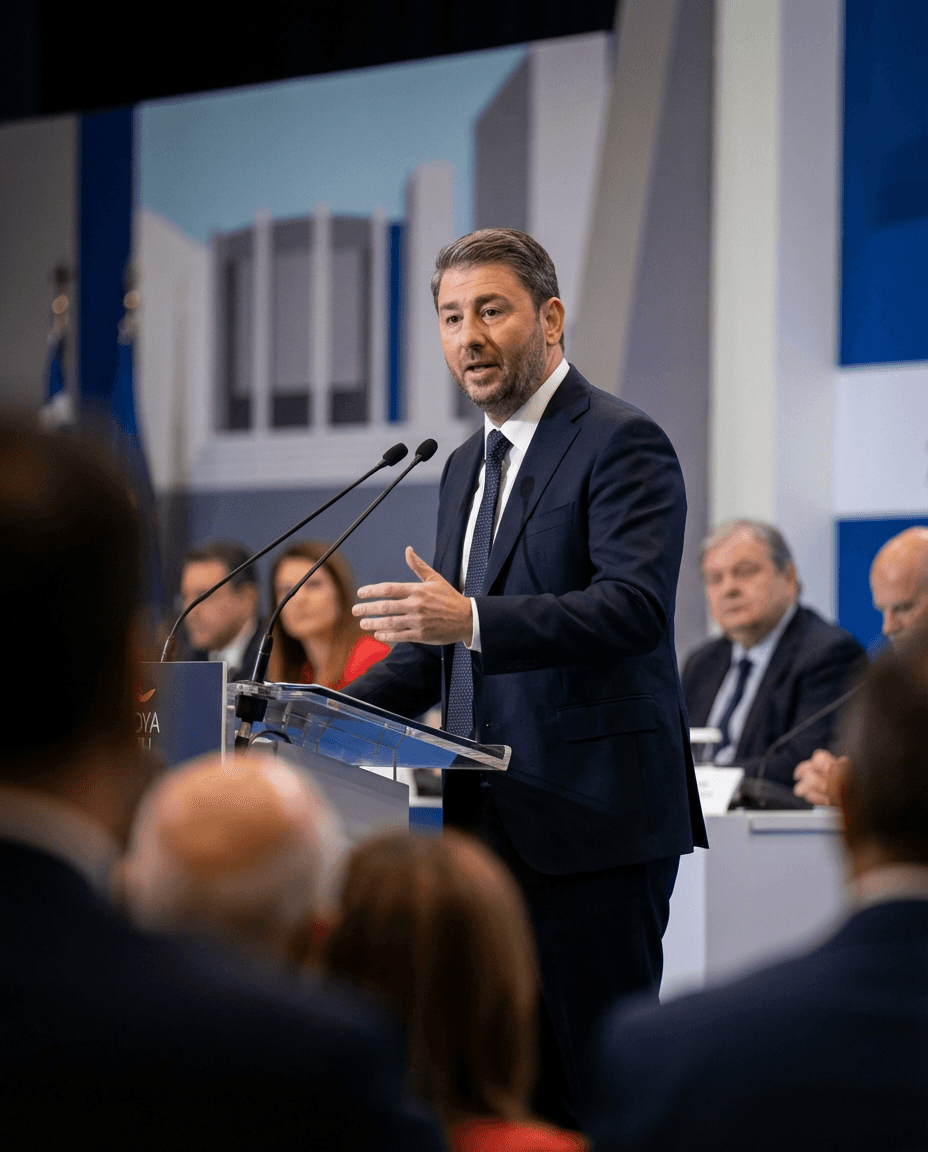
Nikos Androulakis speaking at a public political event.
Venizelos Stresses Constitutional Respect Before Constitutional Revision
Former PASOK President and constitutional scholar Evangelos Venizelos delivered the keynote address, asserting that “respect for the Constitution precedes its revision”. He argued that the crisis affecting Greece is not merely constitutional but reflects a deep erosion of institutional credibility.
Venizelos described an environment marked by diminishing legitimacy, participation and representation. He stated that the country faces serious issues related to the enforcement of constitutional provisions, noting that several constitutional mandates dating back to 2001 have not been properly implemented.
He pointed to the problem of unexecuted rulings issued by national courts, including a decision of the Council of State on the wiretapping case involving Androulakis, which remains unenforced. He reiterated the need to restore institutional credibility, warning that without this foundation it will be impossible for Greece to meet the challenges of the current era.
Regarding the ongoing wiretapping trial, Venizelos said that “the ordeal of witness examination in the courtroom reveals the scale of the case, which was covered up during the preliminary and parliamentary phases”. He urged Parliament and the leadership of the judiciary to respond to what he described as serious issues emerging from the proceedings.
He also criticized the handling of the OPEKEPE inquiry committee, saying that the process amounted to a humiliation of Parliament, demonstrating that the majority was afraid of its own MPs. Addressing the way some witnesses invoke the right to remain silent, he noted that while the right itself is legitimate, “it is being exercised in a manner that demeans Parliament”.
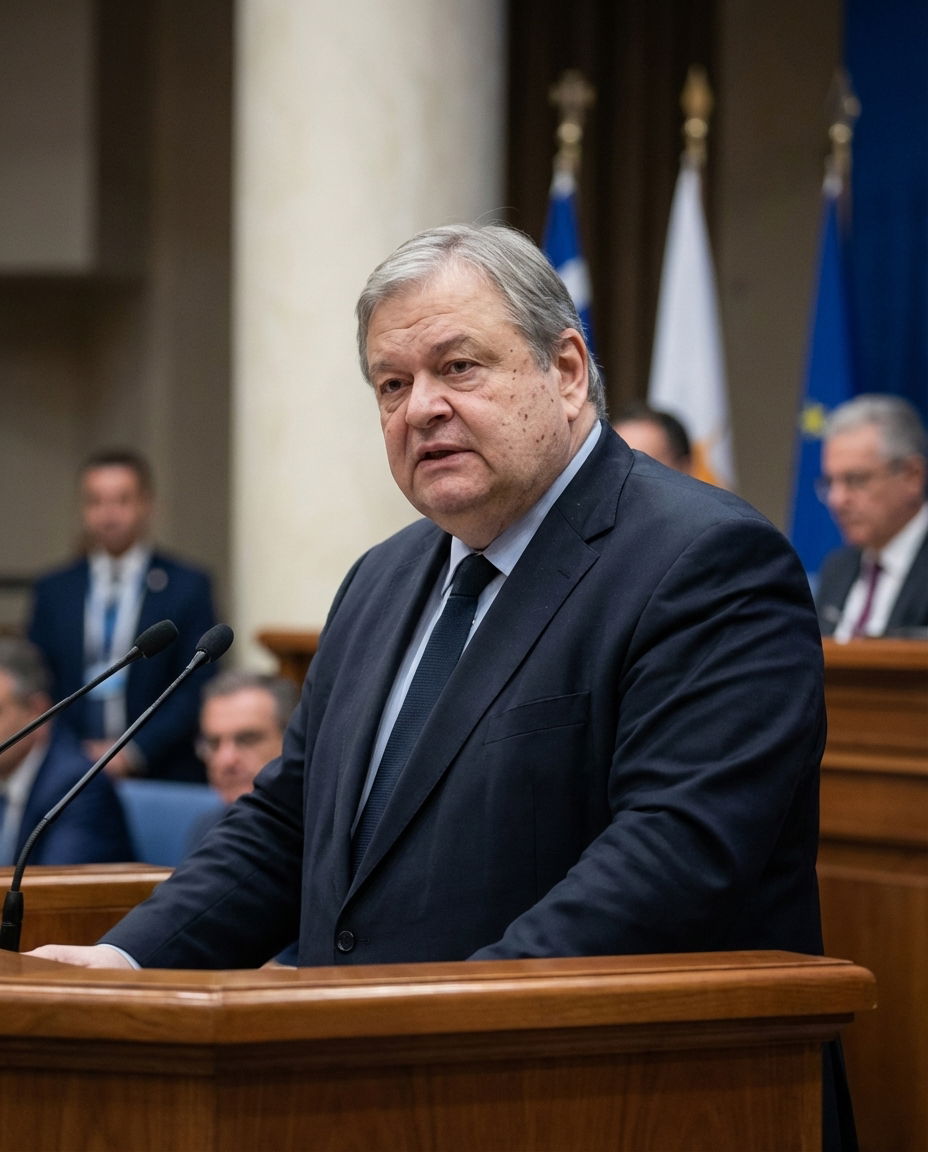
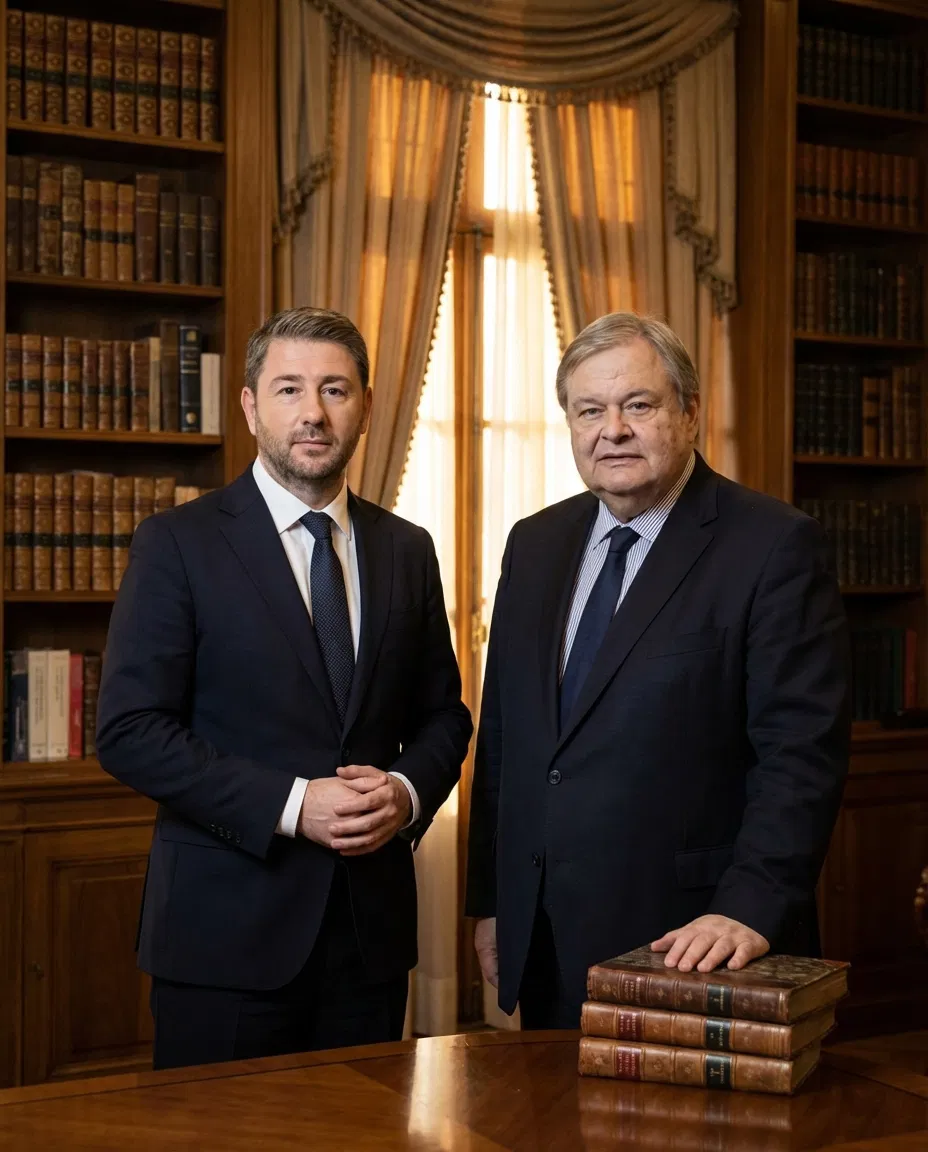
Evangelos Venizelos in a formal political environment during a constitutional discussion.
Venizelos described Androulakis’s proposal on Article 86 as “weighty”, adding that society expects a clear response. He concluded by stating that Greece “must become governable before the Constitution becomes revisable”.