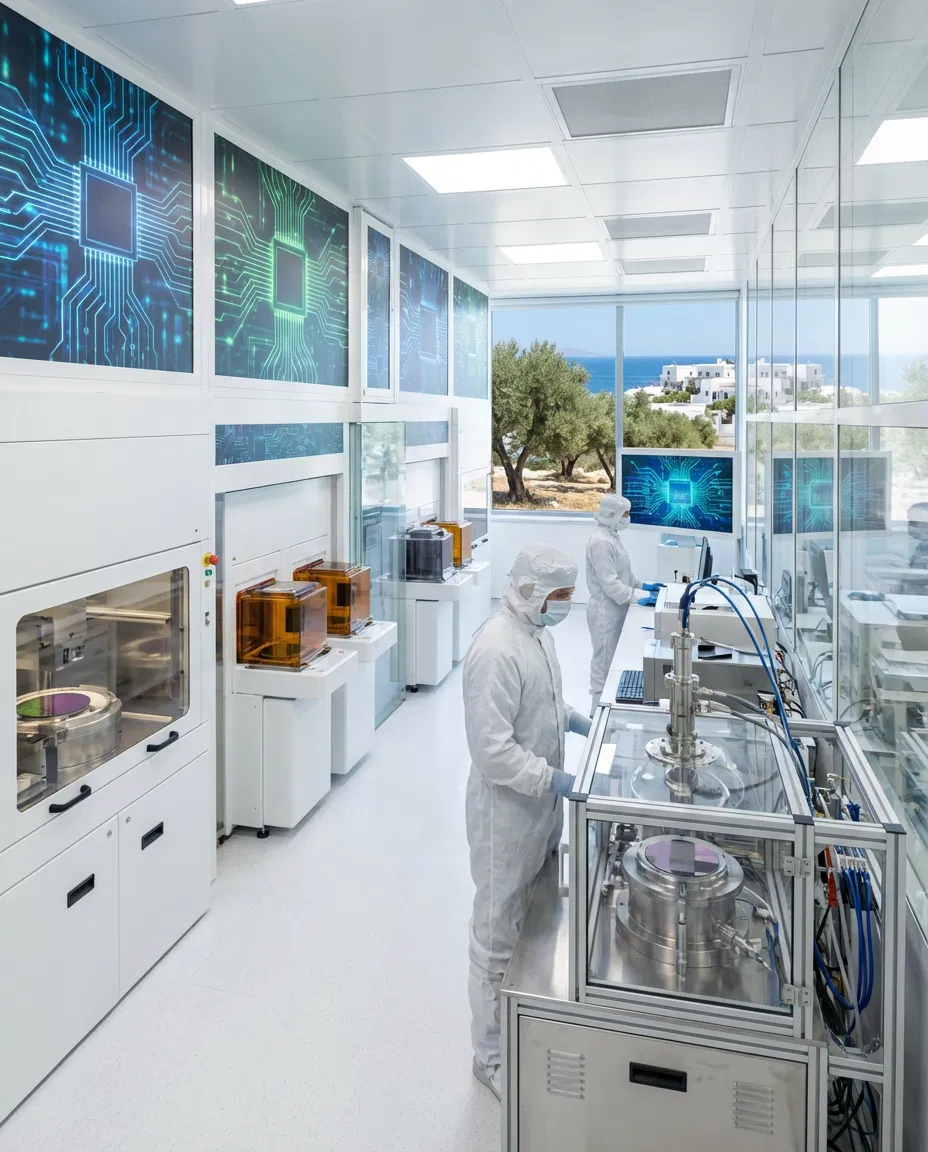

Greece moves toward a stronger regional role in semiconductors
The semiconductor sector in Greece is expanding at a notable pace, positioning the country as a potential regional center for chip design and packaging. Long term ambitions include attracting full scale manufacturing plants that could elevate Greece into a more influential role in the global semiconductor landscape.
Data presented at the fifth Emerging Tech Forum by the HETiA association showed that Greek semiconductor companies surpassed €1 billion in revenue in 2024, compared with €800 million in 2023. The sector also increased its contribution to national GDP from €338 million in 2020 to €815 million in 2024.
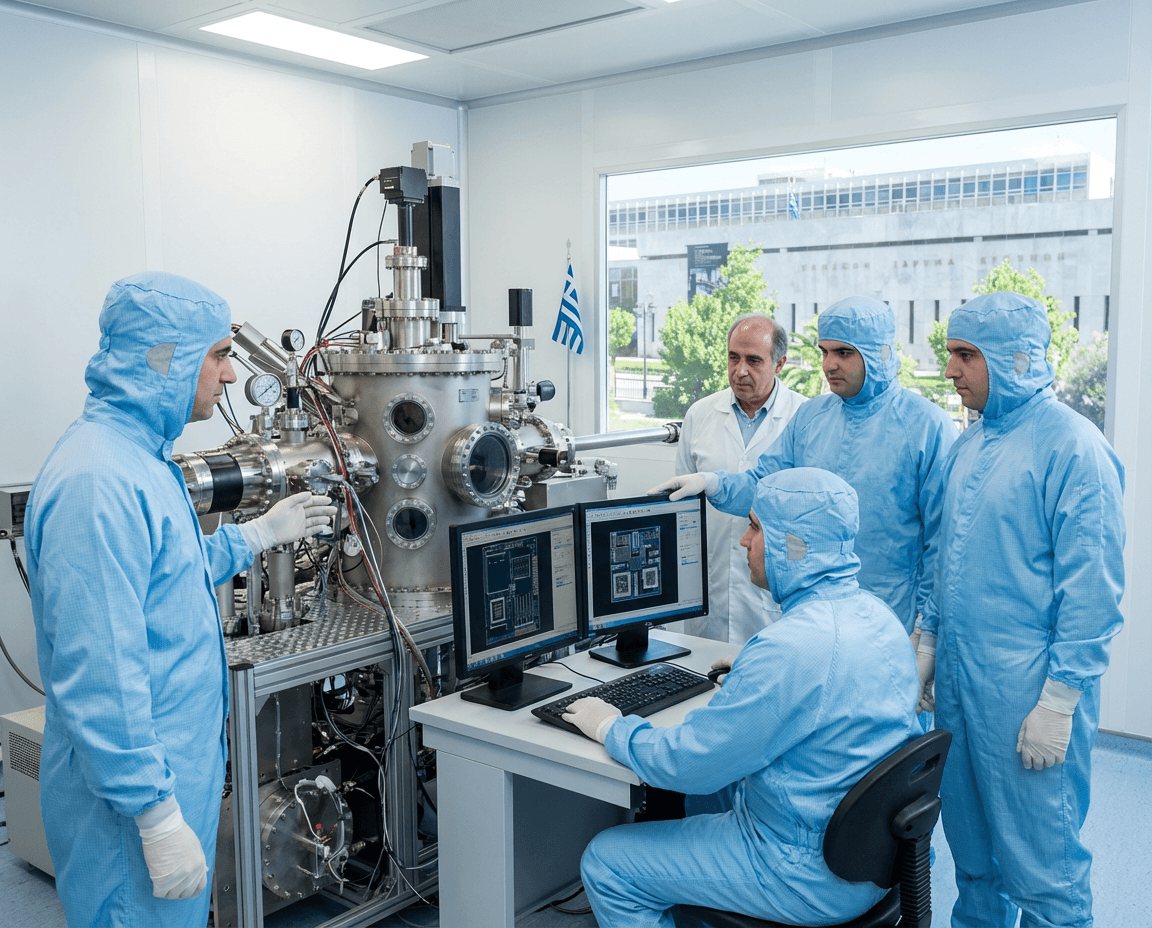
Researchers in a modern Greek technology lab working on microchip design.
These figures form part of an ongoing mapping study led by Professor Angelos Tsakanikas at the National Technical University of Athens. The study is expected to be completed within the next two months and will contribute to the development of Greece’s National Microprocessors Strategy, which the Deputy Minister of Development Lazaros Tsavdaridis and the Secretary General of Industry Eleftherios Kritikos stated will be ready in the first half of 2026.
Over the past two decades, Greece has attracted substantial investment from major technology companies such as Nvidia and Qualcomm. Their research and development operations have helped shape a strong domestic ecosystem focused mainly on semiconductor design. Speakers at the forum, including HETiA president Manolis Zervakis, stressed that the next significant step is the creation of chip packaging production units. According to their statements, the ultimate ambition is to attract a microprocessor foundry, which would dramatically reshape the landscape for Greece.
Zervakis also noted the importance of launching a national microprocessors program to strengthen the ecosystem further. Despite several high profile acquisitions of Greek tech companies, such as the purchase of Beta CAE by Cadence for $1.3 billion, funding for new semiconductor related startups remains limited.
The country aims to secure a meaningful regional position as the European Union advances its second phase of semiconductor industrial strategy, known as Chips Act II. Thomas Skordas, Deputy Director General of DG CONNECT at the European Commission, stated that Chips Act II is built on three pillars: AI, production facilities, and workforce development. He also mentioned that a new framework for cloud technologies is expected soon, linked to the formation of AI gigafactories, an area where Greece has shown interest.

Abstract imagery showing cooperation between Greece and the EU on semiconductor development.