
Greek Shipowners Accelerate Their Push in the Global Orderbook
Greek shipowners expanded their newbuilding program in November, strengthening their presence across strategic shipping sectors. Industry data indicated that they continued to capitalize on favorable shipyard pricing and anticipated long term demand, even as other leading maritime players adopted more cautious approaches.
The latest figures from Xclusiv Shipbrokers showed that the Greek orderbook rose to 693 ships in November, up from 651 in October. This represents 15.6 percent of the global orderbook, compared with 15.07 percent a month earlier. With the global orderbook standing at 4,425 ships, Greece maintained one of the most active newbuilding programs worldwide.
Bulk Carrier Expansion
Bulk carriers were again a strong focus. Greek owners had 162 bulkers under construction in November, compared with 156 in October, representing roughly 12 percent of the worldwide bulk carrier orderbook. This activity followed a notably quiet first 9 months of 2025, during which companies with Greek interests reportedly placed no bulk carrier orders for the first time in decades.
The composition of the Greek bulker program revealed a targeted strategy:
Panamax, Kamsarmax and Post Panamax: 100 ships (62 percent)
Handymax, Supramax and Ultramax: 39 ships (24 percent)
Capesize and VLOC: 11 ships (7 percent)
Handysize: 12 ships (7 percent)
This concentration in Kamsarmax and Post Panamax designs aligned with wider industry efforts to adopt more efficient units capable of meeting evolving fuel and environmental standards.
Cited industry data noted that the global dry bulk carrier orderbook equals 11 percent of the active fleet, with 281 new vessels contracted this year. The global bulker fleet averages 12.4 years of age, and 28 percent of vessels are older than 16 years, reinforcing renewal pressures.
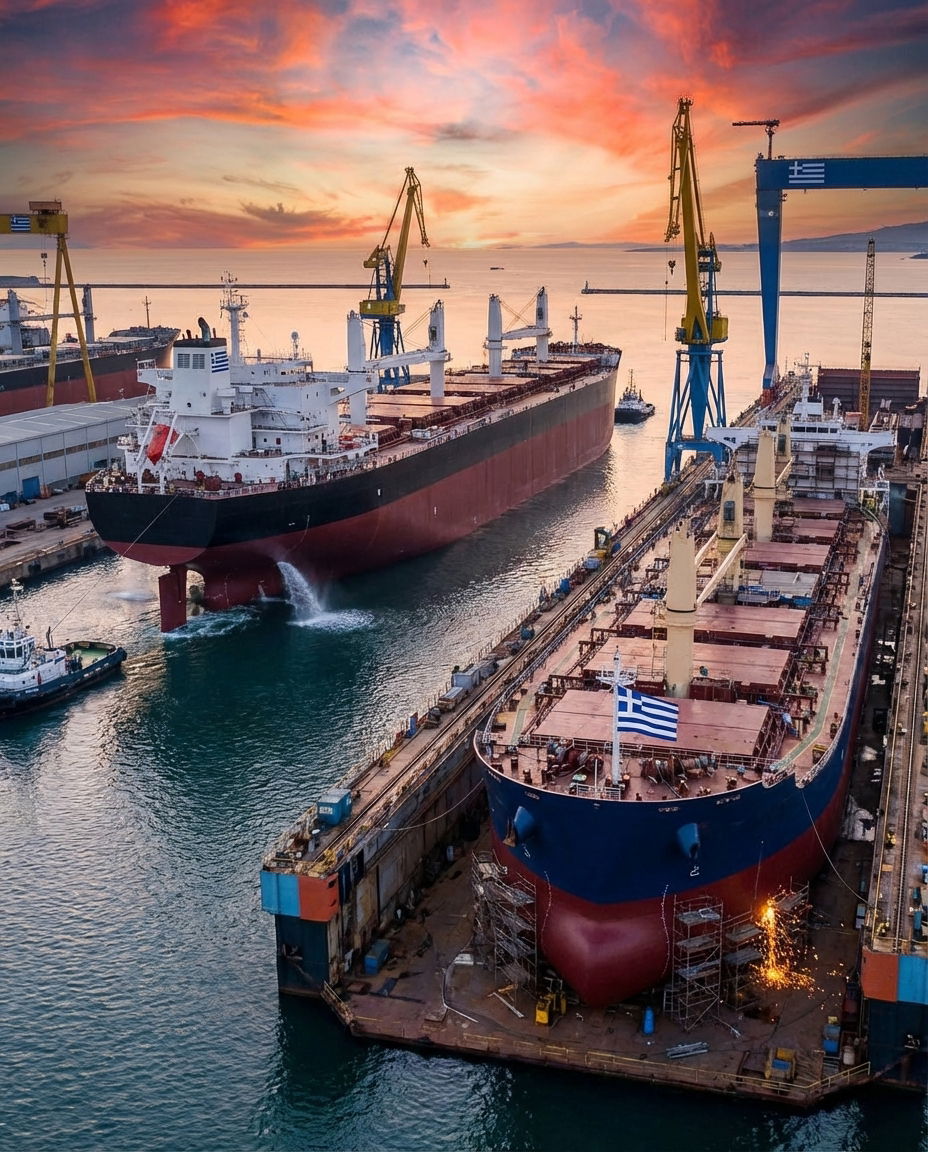
Bulk carriers under construction
Tanker Leadership Continues
Greek owners also strengthened their long standing dominance in the tanker market. A total of 302 tankers were under construction for Greek companies, representing 24 percent of the global tanker orderbook.
The breakdown showed particularly heavy investment in larger tanker classes:
Suezmax: 88 ships
Aframax and LR2: 65 ships
VLCC: 29 ships
MR2: 52 ships
Analysts cited that the global tanker orderbook now equals 16.7 percent of the world fleet in DWT, up from 13.7 percent last year. A total of 258 tankers were ordered in 2025, reflecting increased demand across crude and product segments.
Containership Growth and Fleet Renewal
In the containership sector, Greek shipowners expanded their presence significantly. Their orderbook reached 126 units in November, accounting for approximately 11 percent of global containership newbuildings. This marked a rise from 111 vessels in October, which represented around 10 percent of worldwide orders.
The distribution of Greek containership orders showed a clear strategic pattern:
Feeder: 48 ships (38 percent)
NeoPanamax: 48 ships (38 percent)
Handy: 23 ships (18 percent)
Panamax: 7 ships (6 percent)
Cited data indicated that the global containership orderbook now equals 33.2 percent of the active fleet in TEU terms, with 548 vessels ordered in 2025. Nearly 46 percent of the world fleet is over 16 years old, strengthening the drive for renewal.
Growing LNG and LPG Presence
Greek activity in LNG and LPG shipping also remained strong. Their LNG orderbook reached 57 vessels, equal to 18 percent of the global total. Most newbuildings were in the 141,000 to 200,000 m3 range, totaling 51 ships, with an additional 6 ships in the 16,000 to 100,000 m3 category.
Industry information suggested that these LNG commitments reflect Greece’s expanding role in one of the fastest growing global maritime sectors, supported by demand for both spot and long term LNG contracts.
In LPG shipping, Greek owners held 46 units under construction, accounting for 15 percent of worldwide orders. The distribution included:
VLGC: 21 ships
MGC: 10 ships
Small LPG: 11 ships
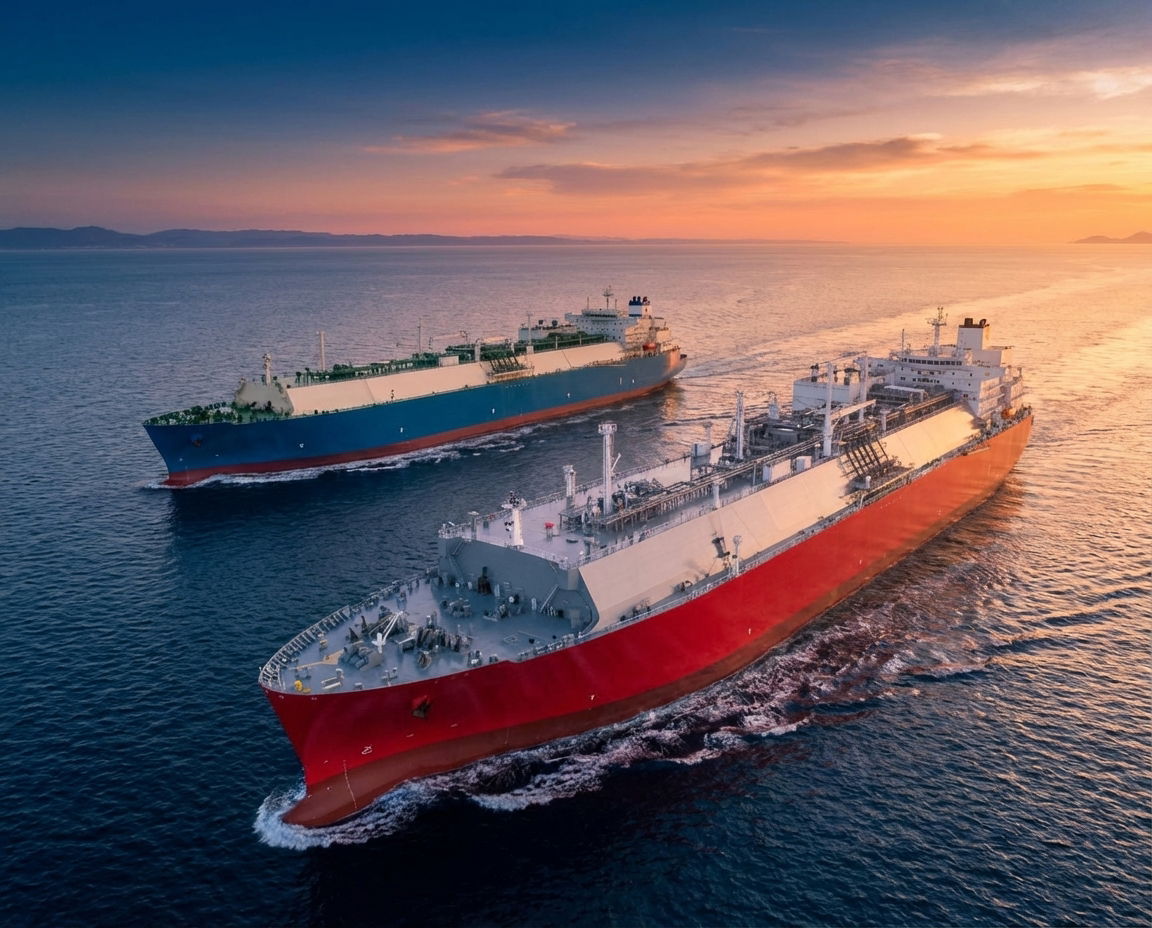
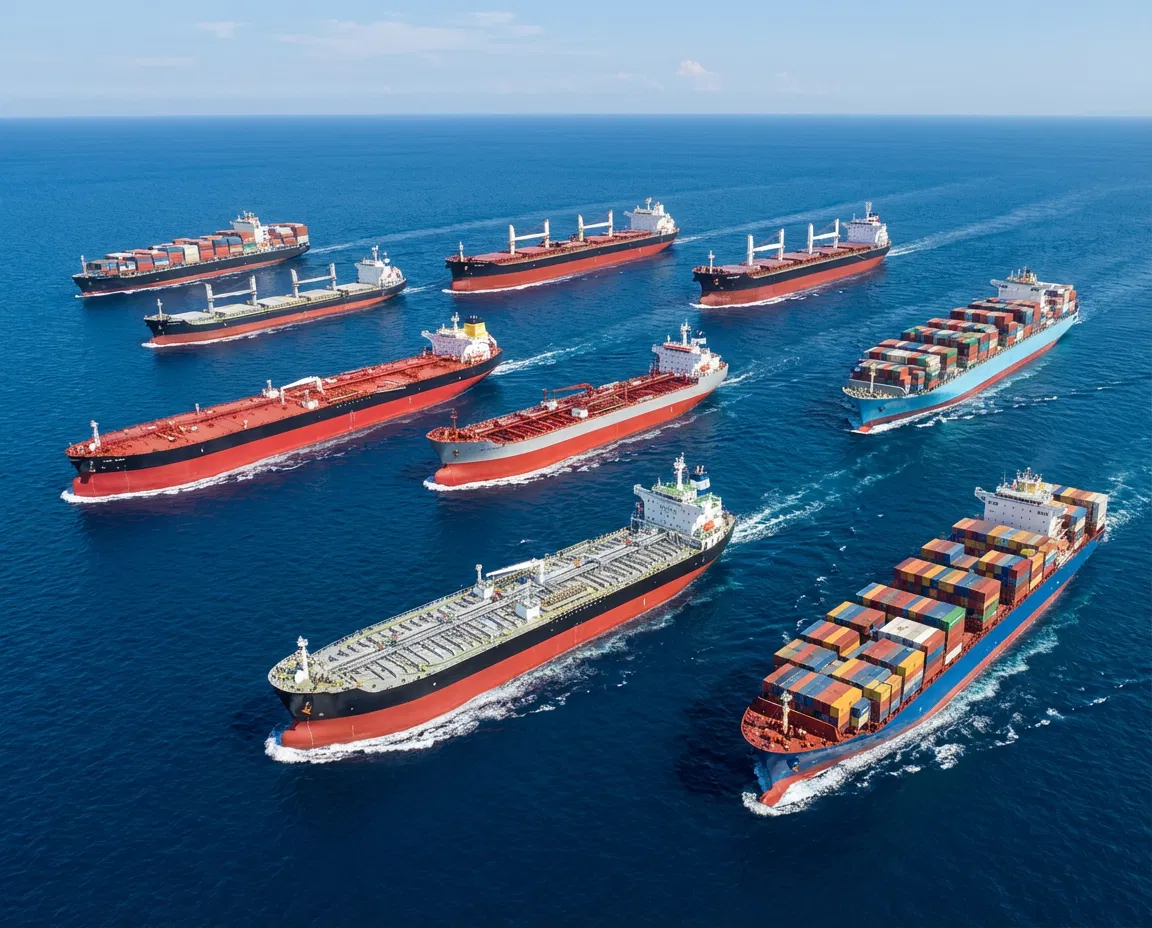
LNG and LPG carriers at sea
Across all segments, the steady rise in Greek orders contrasted with the more conservative posture seen elsewhere in the world, illustrating a forward looking approach built on expectations of growing global trade and favorable newbuilding economics.