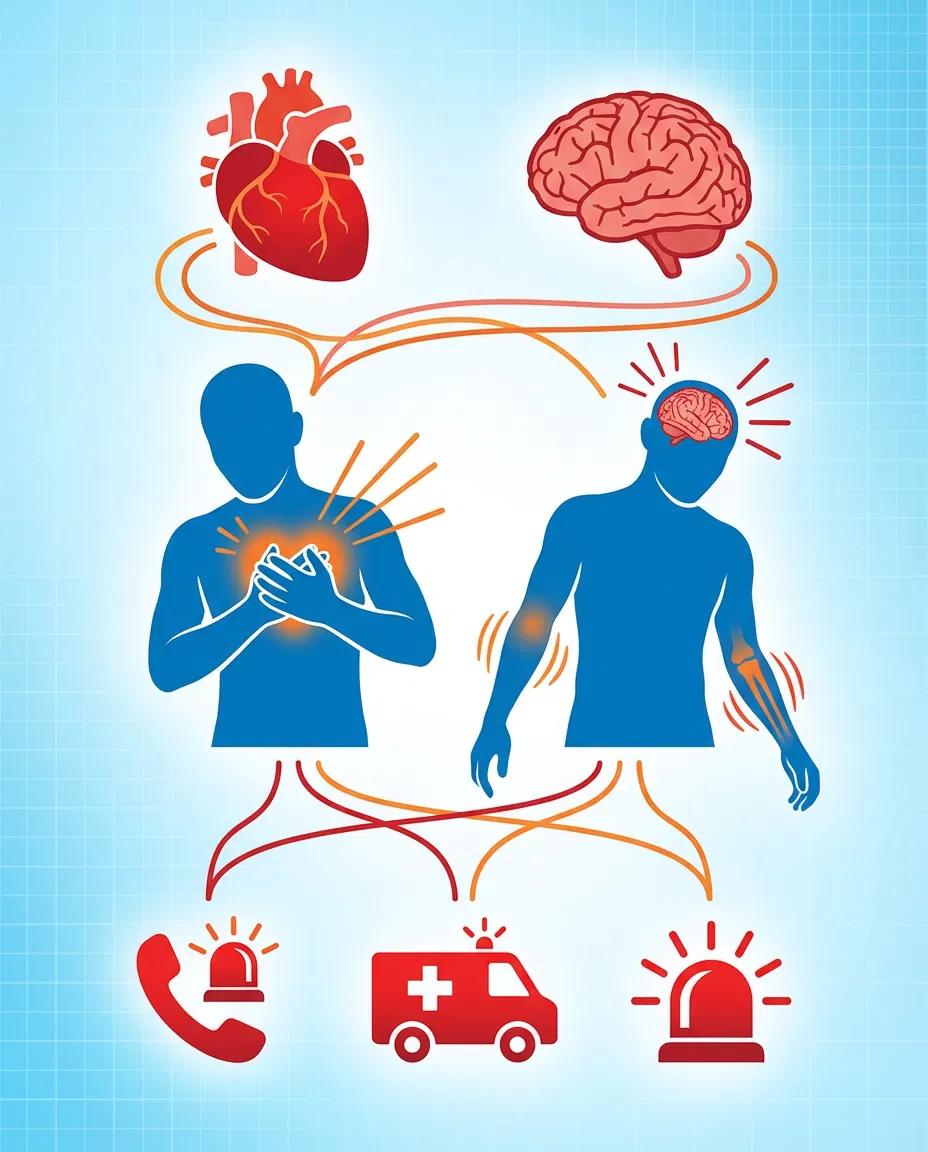

Preparing for a potential heart attack or stroke can make a crucial difference in an emergency. Thinking ahead about how to respond allows individuals to stay calm and act decisively when symptoms strike.
Understanding that these events can happen without warning encourages people to develop a simple plan that goes beyond dialing 166. Having clear steps in mind may improve outcomes when every second matters.
In Case of a Heart Attack
A heart attack occurs when a coronary artery becomes partially or fully blocked, cutting off blood flow to the heart muscle.
Recognizing the signs early can be lifesaving. Heart attack symptoms may be intense or subtle, and many patients initially mistake them for stress, indigestion or a common illness, according to cardiologist Dr Ariane Fraiche of Beth Israel Deaconess Medical Center.
Pay attention to any sudden combination of the following:
Chest pressure
Pain spreading to the arms, jaw, neck or upper back
Shortness of breath
Excessive sweating
Nausea or vomiting
Dizziness or a feeling of faintness
Unusual weakness or fatigue
These signs can appear abruptly or develop gradually, regardless of whether someone is resting or physically active.
Immediate action is essential if symptoms arise. Dr Fraiche advises calling 166 even if there is uncertainty about whether it is truly a heart attack, as paramedics can quickly assess the situation and determine the appropriate hospital.
While waiting for help, consider the following:
Rest in a comfortable position
Take aspirin only if a healthcare professional recommends it
Certain actions should be avoided during a suspected heart attack. Dr Fraiche stresses that individuals should not:
Drive themselves or accept a car ride to the hospital
Eat snacks
Gather personal belongings
In Case of a Stroke
A stroke interrupts blood flow to the brain and may be caused by a blocked artery or bleeding.
Recognizing sudden changes in physical or cognitive function is vital. Watch for any of these signs:
Difficulty walking
Vision problems in one or both eyes
Trouble speaking
Challenges understanding speech
Numbness or weakness on one side of the body
Severe headache
Dizziness or loss of balance
Quickly calling 166 is crucial if stroke symptoms appear, and the caller should mention that a stroke may be occurring.
While waiting for emergency responders, Dr Fraiche recommends the following:
Sit or lie down to prevent falls
Note the exact time symptoms began, as treatment effectiveness often depends on timing
Certain actions can worsen the situation during a stroke. Individuals should not:
Travel to the hospital by car
Eat or drink unless experiencing low blood sugar
Take aspirin without medical guidance
Medical teams typically rely on brain imaging before deciding whether aspirin is appropriate, Dr Fraiche notes.
Additional Preparation Strategies
Further steps can strengthen emergency readiness. Discussing emergency plans with loved ones and healthcare providers ensures everyone knows what to expect and how to respond.
Ask your doctor about your personal risk for heart attack or stroke.
Creating an updated emergency list is also helpful. This list should include medications with dosages and schedules, doctor contact information and an emergency contact. Keeping it accessible in a smartphone, wallet or on the refrigerator ensures it can be taken to the hospital.
Packing a small hospital bag in advance adds another layer of preparation. This bag may include essentials such as copies of the emergency list, advance medical directives and a phone charger with a long cable. The final priority is reaching the hospital promptly when an emergency occurs.