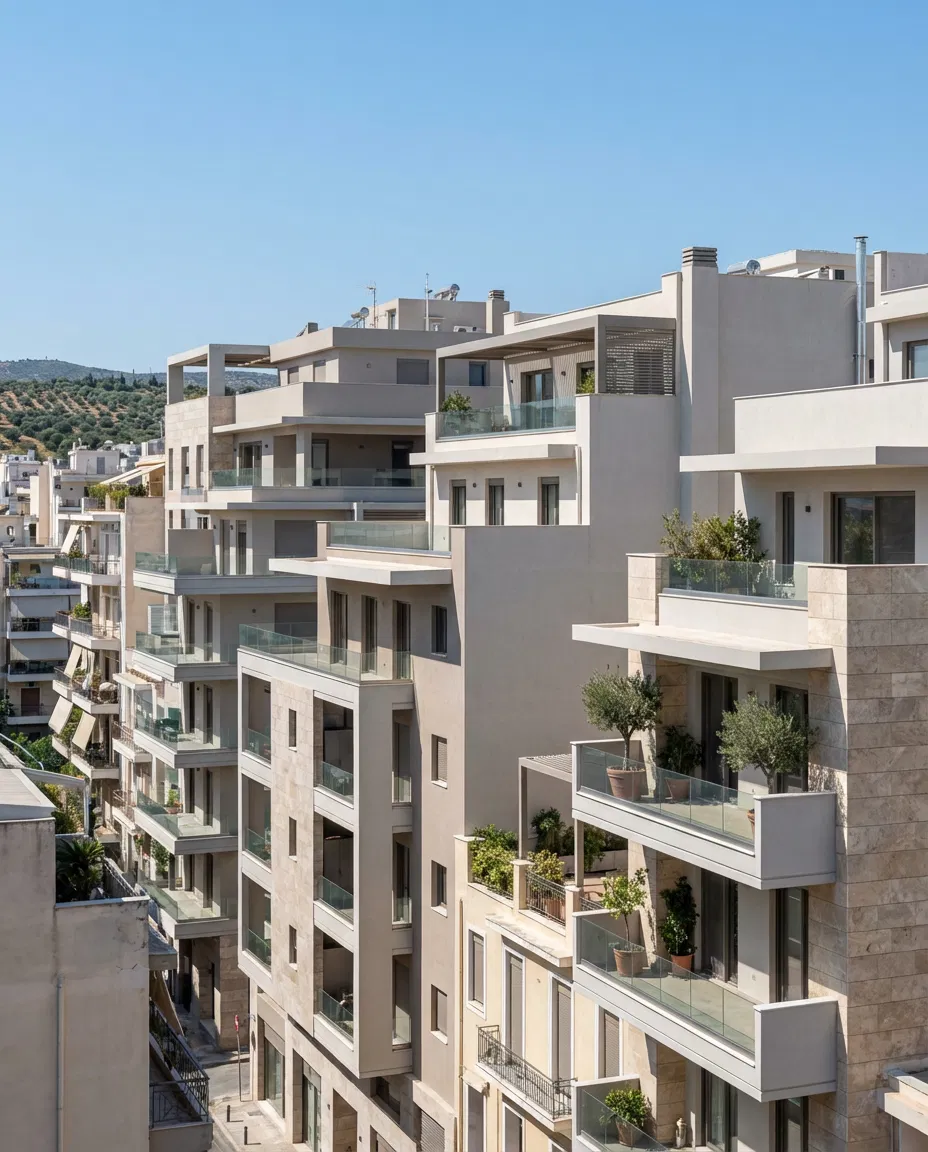

Legalization Deadline Pressures Property Market Ahead of 31 March
Property owners seeking to sell or transfer real estate have until 31 March to make use of the existing framework for legalizing building violations. The requirement for a building identity, in force since April 2022, has tightened the verification process and exposed extensive inconsistencies in construction records across the country. Market data indicates that fewer than 5 percent of building permits fully match the structures built on site.
Most discrepancies relate to minor differences in documented square meters, with conflicting figures often appearing between the Land Registry, TAP and E9 listings. Apartment buildings constructed between 1985 and 2000 present the highest concentration of issues, especially those involving semi outdoor spaces that were commonly enclosed during that era. Many such spaces were legalized under earlier laws, yet documentation errors remain widespread.
Lost or destroyed building permits further complicate the process. Aged archives, municipal record damage and natural disasters have caused gaps in official files, even in large municipalities in Attica. Engineers and notaries are increasingly burdened as the March deadline approaches, heightening the risk of mistakes and slowing down transactions.
Property sales and parental transfers may stall without access to mechanisms that allow corrections to building violations. Programs such as Spiti Mou II and Exoikonomo could also face setbacks, as participating properties must possess a valid building identity. Regulatory authorities maintain that the building identity requirement is essential for transparency in real estate transactions.
Legalization provisions apply only to violations completed up to 2011. Any construction carried out after that year cannot be legalized under current law and is therefore not eligible for transfer. Properties built before 9 June 1975 can be regularized with a straightforward €250 fee, provided no newer violations exist. When additional irregularities were added after that date, the property is categorized accordingly and assessed under categories 2, 4 or 5.
Homes built between 1990 and 2010 tend to incur the highest legalization costs. Fines often exceed €10,000 because they are calculated according to surface area and objective property value. Many owners avoid initiating the process unless a sale or other urgent need arises, largely due to budget constraints.
Most problems appear in apartment buildings completed between 1985 and 2000, primarily due to semi outdoor spaces.