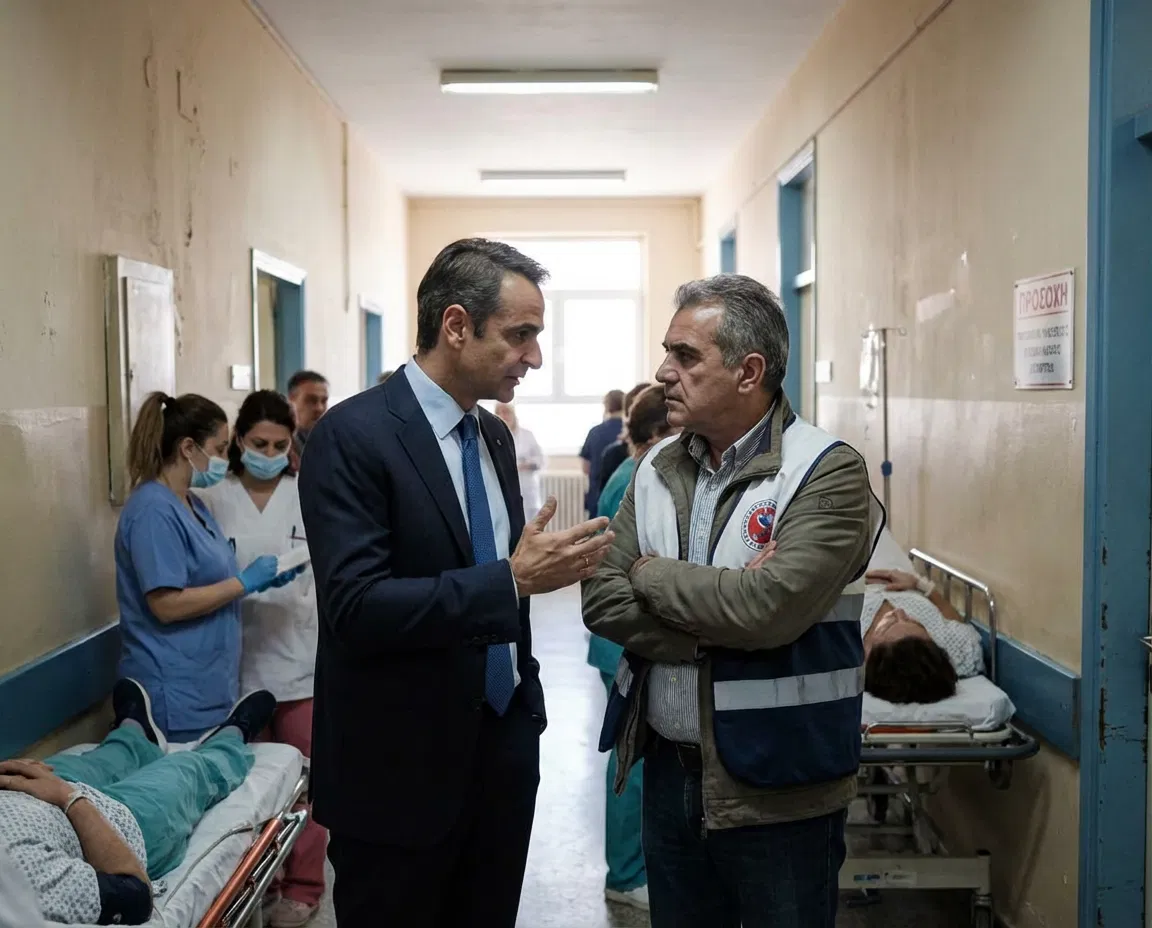

Mihalis Giannakos issued a pointed response to Prime Minister Kyriakos Mitsotakis New Years Day visit to Gennimatas Hospital, accusing the government of presenting half truths about Greece’s public healthcare shortages.
According to the POEDIN president, many staffing posts remain vacant because low salaries and exhausting working conditions have driven both new and experienced healthcare workers away from the ESY.
Statements from Giannakos emphasized that repeated calls for permanent and contract staff often go unanswered, as young professionals show little interest in joining a system plagued by low pay and chronic strain.
Resignations among existing workers have accelerated, creating a cycle where new job postings mostly reshuffle current staff rather than attracting fresh recruits.
Salary levels for nurses and support staff in Greece further discourage applicants, with new nurses earning 836 euros per month for 12 annual payments, while assistants and orderlies receive even less.
Comparisons to Cyprus reveal stark differences, as newly appointed nurses there start at 1.750 euros monthly, work fewer hours and receive additional compensation for overtime, holidays and night shifts.
Concerns raised by Giannakos include the fact that private sector workers in Greece receive 14 salaries a year unlike their ESY counterparts, who lost holiday bonuses during austerity years.
Suggestions from POEDIN focus on improving pay scales, adding healthcare roles to the hazardous professions category and granting permanence to long serving contract workers.
Emergency operations at Gennimatas Hospital illustrate the scale of the strain, with between 800 and 1000 patients arriving during major shifts and around 200 requiring admission.
Overcrowding at large hospitals persists partly because primary care remains weak, forcing patients with non urgent needs to rely on already overstretched emergency departments.
Conditions described by Giannakos include the use of hallway beds and the treatment of medical cases in unsuitable wards, creating heightened risk of infections.
Patterns observed across regional hospitals show that many have effectively lost their secondary care capacity and now function primarily as transfer hubs due to shortages of doctors and nurses.
Responsibility for addressing these long standing gaps lies with the government, Giannakos stressed, arguing that the Prime Minister holds the authority to initiate meaningful reforms.