

Conceptual illustration of financial relief after bankruptcy in Greece.
A Preventive Voucher Program Before Financial Collapse
A separate measure introduced under article 177 focuses on preventing financial collapse before it becomes irreversible. Through funding from the Recovery Fund and the Information Society, the state will grant free vouchers to professionals facing or approaching insolvency. These vouchers will cover specialized consulting services including legal, financial, and psychological support.
The program functions through an Early Warning Mechanism that monitors economic indicators and identifies danger signs. When risk levels rise, professionals can apply via the General Secretariat for Financial Sector and Private Debt Management to access support. Certified advisors will help develop recovery strategies tailored to each case.
The measure acknowledges not only the financial but also the emotional burden associated with debt. For the first time, psychological support and mentoring services are included to help business owners regain confidence as they plan a sustainable recovery path.

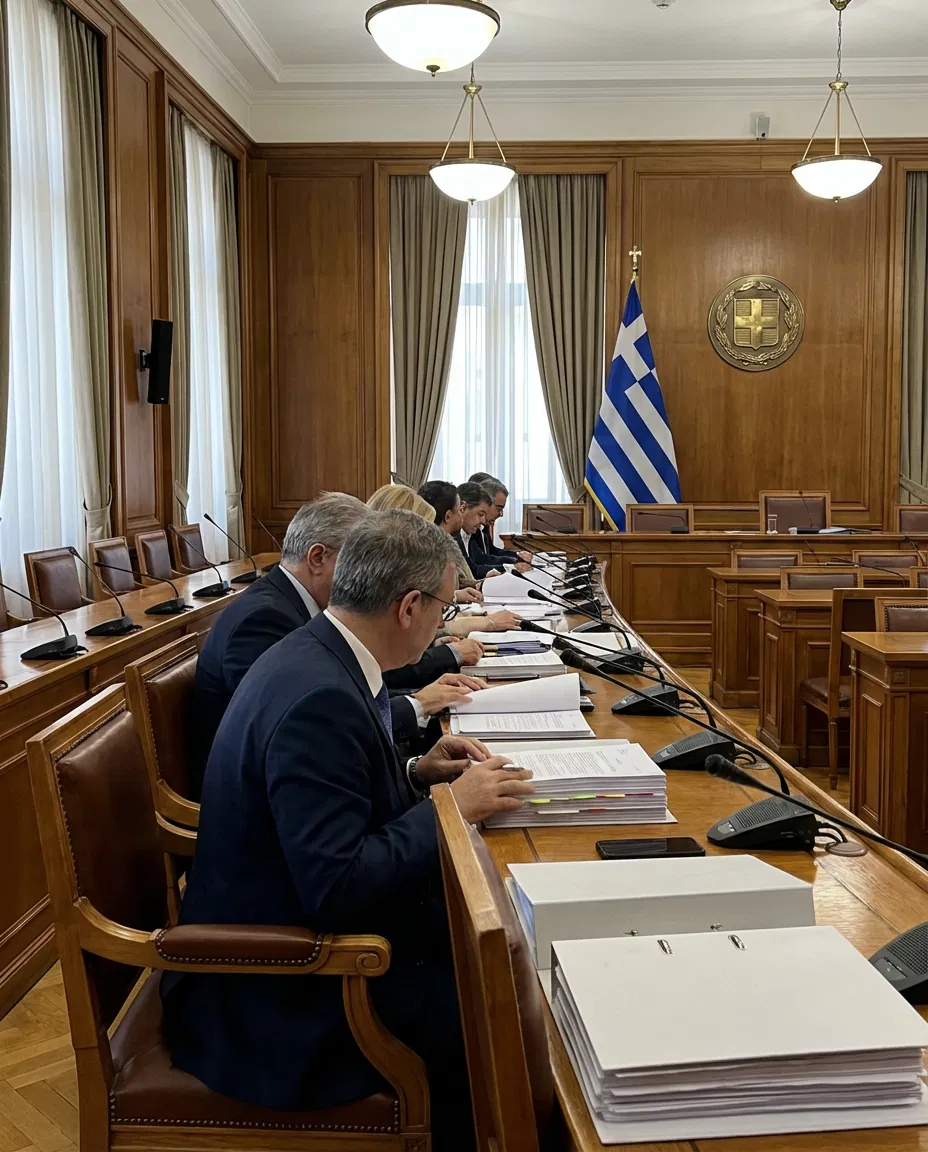
Illustration of a professional receiving guidance through a government assistance program.
A joint ministerial decision will determine the eligibility criteria and the program start date. Training for early warning advisors is already underway.
Provisions for Vulnerable Borrowers
Article 179 introduces technical rules concerning vulnerable borrowers receiving state housing support. If such a borrower enters the Out of Court Settlement Mechanism and signs a new agreement safeguarding their home, the existing subsidy is automatically terminated. This prevents double support from different programs and protects borrowers from having to return subsidies later if the initial purpose for the aid no longer applies.