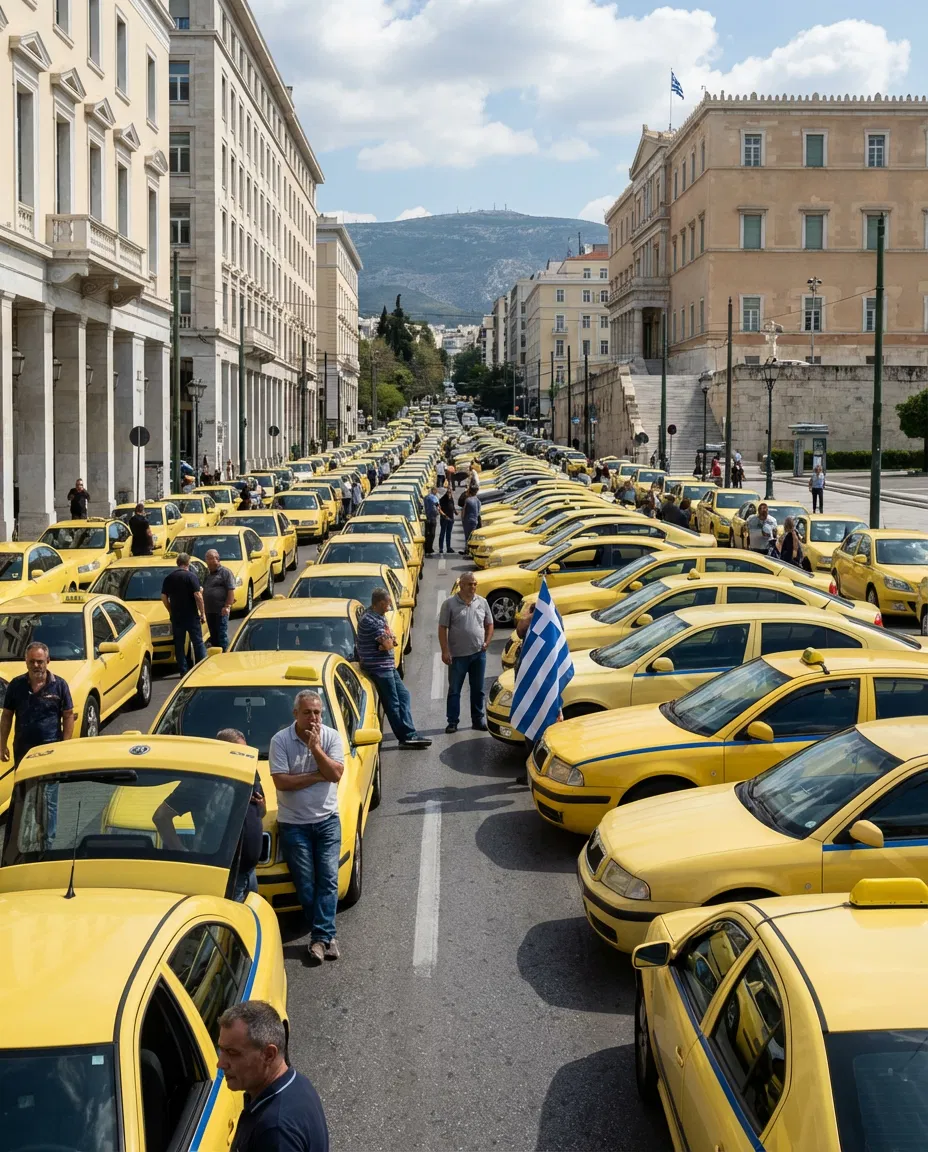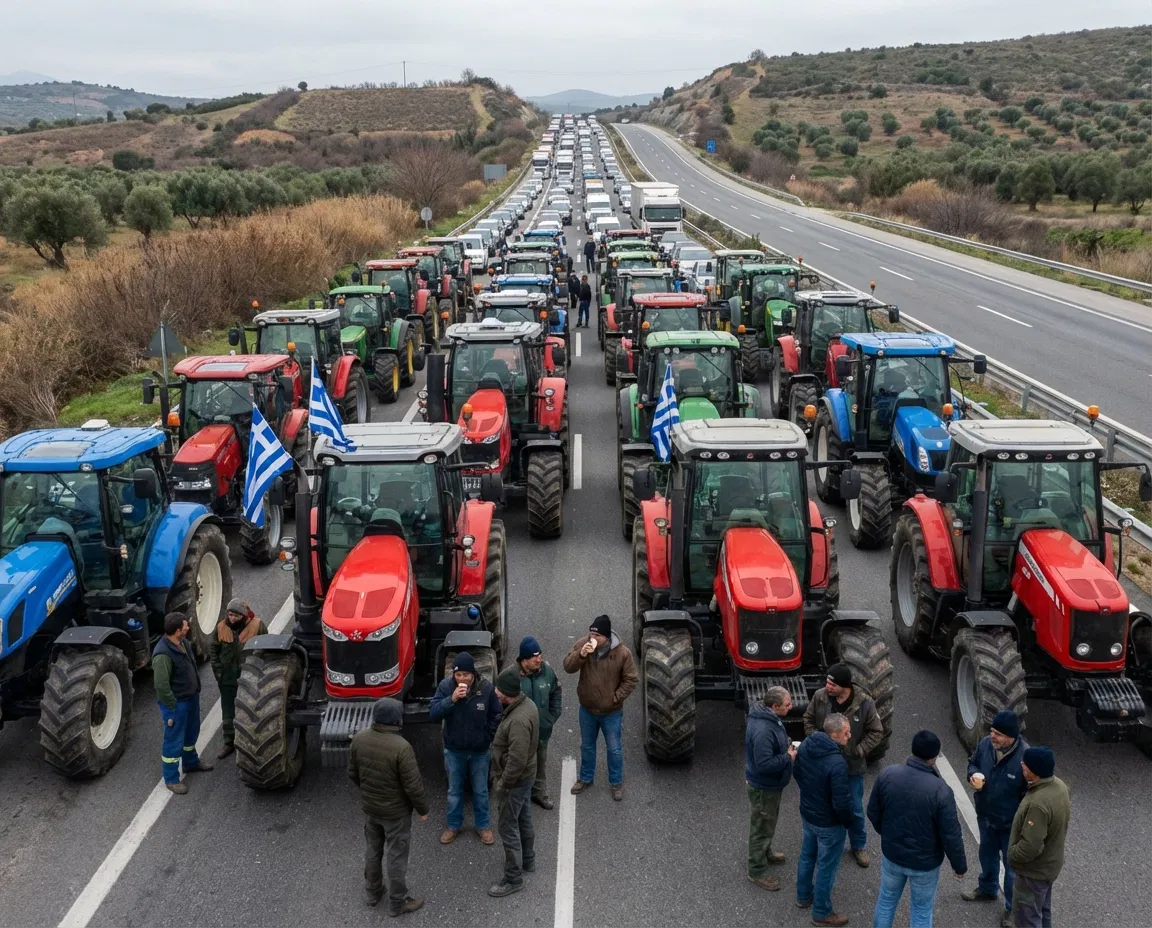

Nearly 40 days after tractors first rolled onto major Greek highways, the confrontation between farmers and the government has sharpened considerably. As announcements on support measures remain pending, farmers signal that unless every demand is met, a 48 hour blockade of roads and border crossings will begin on Thursday and Friday.
In Nikaia, the overpass toward Thessaloniki remains shut while new traffic diversions have been issued by police. According to Coordinating Committee member Iordanis Ioannidis, farmers refuse to enter discussions as beggars, arguing that tax refund promises fall far short of meaningful relief.
Across Western Thessaly, blockades persist at Karditsa on the E65 and at the Longos toll station near Trikala. Local assemblies have decided to escalate actions, with Trikala farmers planning a 48 hour shutdown in Mourkani and their Karditsa counterparts preparing to move toward Mpralos in Fthiotida to obstruct all travel routes to and from Athens.
At the Nikaia Larisa junction, farmers continue their demonstrations, maintaining disruptions along the Athens Thessaloniki national highway. Since Monday, police have redirected traffic through alternative routes, urging drivers to follow signage and official instructions.
From 11:00 to 13:00 today, the Makrychori toll station is scheduled to open temporarily, with tractors expected to participate as part of coordinated nationwide actions.
In Achaia, the Patras Ring Road remains closed with no plans to reopen even for Epiphany, while the Rio Antirrio bridge, the Drepano tolls and the port of Patras stay at the center of regional mobilisations.
In Aetolia Acarnania, toll barriers at Angelokastro will stay open until Thursday, with possible farmer movement toward the Rio Antirrio bridge. In Boeotia, sections of the Athens Lamia route require diversions through secondary and rural roads.
In the Evros region, farmers and livestock breeders have launched a 48 hour blockade of the Promachonas customs point for trucks, though the Kipi crossing remains open to cars, tour buses and perishable goods coming from Turkey.
In Chania, protesters at Megala Horafia continue preparations for a Thursday closure of the National Road and a march toward the Chania Tax Office on Friday.
Government officials argue that farmers consistently reject dialogue while issuing ultimatums. According to ruling party MP Dimitris Markopoulos, proposals have been placed on the table yet talks are refused, leaving the government to take what it views as necessary action. He stresses that society’s patience is finite and cannot endure ongoing road closures.
Opposition voices counter that the government bears responsibility for the deadlock. PASOK member Vasia Anastasiou contends that mixed messages from the ruling party have undermined trust, while attempts to divide the public only inflame tensions.
SYRIZA MP Vasilis Kokkalis adds that a credibility deficit has grown between the government and rural communities, calling for a clear roadmap and substantive measures that address structural challenges facing the agricultural sector. Before any growth promise, he notes, viability must be secured.
Government spokesperson Pavlos Marinakis reiterates that all announced measures are final and will not be expanded. In his remarks, he emphasizes that the government must consider every citizen, insisting that these policies apply to all farmers, not only those at the blockades.
Public patience, he warns, has reached its limits as travellers experience delays of 5 to 6 hours in some cases. While expressing hope that the situation will not escalate further, he states that boundaries must be respected and that tolerance for prolonged disruption cannot continue indefinitely.