
National Grief After Deadly Train Collision
Spain is engulfed in sorrow following a devastating high speed train collision that has claimed 40 lives and left many more injured or missing. The tragedy near Adamuz has prompted an intensive investigation into the exact causes of the violent crash.
Broken Rail Section Under Scrutiny
Investigators at the scene identified a broken piece of rail believed to be a key factor in the deadly impact. Authorities confirmed that 40 people have died, making this one of the most catastrophic rail accidents in Spain in the past decade.
How the Collision Happened
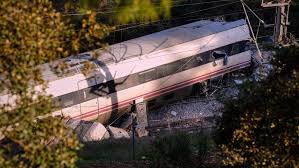
The accident occurred late Sunday night on 18 01 when coaches of an Iryo high speed train traveling from Malaga to Madrid derailed and crashed into an oncoming Renfe train. The site in Southern Spain lies 360 kilometers from Madrid.
Violence of the Impact
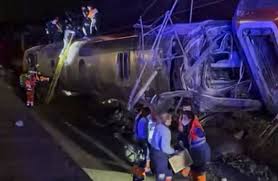
The force of the crash hurled the front carriages of the Renfe train onto a nearby embankment, leaving behind a mangled mass of metal.
Survivors Recount Terrifying Moments
Passengers described scenes of horror, with one woman recalling how the train tilted sharply before everything went dark amid screams.
Struggle for Escape
Another injured passenger said she dragged herself out through a shattered window covered in blood while helplessly witnessing severely wounded people around her.
Locals Rush to Help
Residents used even quad bikes to carry victims to emergency points, describing the site as a scene of total destruction.
Authorities Confirm Casualties
Andalusian regional leader Juan Manuel Moreno confirmed 40 fatalities and said 41 injured people remain hospitalized as families wait anxiously for news.
Three Main Investigation Scenarios
According to El Pais, investigators are examining 3 scenarios: line failure train malfunction or an interaction between minor infrastructure faults and rolling stock.
The Critical 20 Seconds
Renfe head Alvaro Fernandez Heredia said the interval between the trains was only 20 seconds and the safety system had no time to activate.
Human Error Ruled Out
Heredia stressed that the disaster occurred under unclear circumstances and that human error is nearly completely excluded.
Focus on Broken Rails
Transport Minister Oscar Puente stated that the broken rail segment could be either the cause or the effect of the derailment noting the route had recently undergone upgrades.
Technical Findings on Rail Damage
Experts found extensive wear on the rail fishplate determining the defect was not recent and had slowly worsened over time.
Unusual Circumstances Highlighted
Heredia said the accident occurred under strange conditions as the first Iryo carriages crossed the point normally before the final coaches derailed dragging 2 more.
Site Marked for Experts
Police marked the rail gap for forensic examination as seen in images from the scene.
Prime Minister Cancels Davos Visit
Prime Minister Pedro Sanchez cancelled his Davos participation to visit the site with Minister Puente who affirmed that the train was under 4 years old and the line was fully renovated in May 2025.
Maintenance Records Clear
Hitachi Rail had conducted routine maintenance on the Frecciarossa 1000 on 15 January without any issues detected.
Warnings Ignored by Operators
The SEMAF union had warned ADIF in August of severe wear on high speed rail infrastructure including the section where the crash occurred according to a letter seen by Reuters.
Recurring Infrastructure Defects
The union noted frequent damage such as potholes bumps and electrical line imbalances that caused repeated malfunctions reported daily by drivers.
At Least 8 Technical Incidents Reported
El Pais reported that ADIF had logged at least 8 technical issues in recent months on the same line section mostly related to signaling and electrification.
Issues Reached Spanish Senate
Problems on the Adamuz Villanueva de Cordoba stretch were raised in the Senate last summer after the PP party questioned possible safety flaws.
Previous Safety Complaints
Incidents included problems on El Valle bridge caused by heat and vibrations which were repaired during scheduled maintenance.
Relay Card Failure
A faulty relay card essential for detection systems was replaced after causing disruptions according to the government response.
Multiple Maintenance Providers
The Transport Ministry noted that 4 providers are responsible for line infrastructure electrification safety systems and vegetation control on the Adamuz Villanueva de Cordoba corridor.
Minister Notes Strange Conditions
Puente emphasized the unusual circumstances of the crash pointing out that the Iryo train was under 3 years old and the route recently renovated with a major investment.
Renovation Works Completed Recently
The stretch includes 9 renovated bridges and upgraded signaling and safety systems completed by 2024.
Recent Reports of Signaling Problems
ADIF reported at least 8 incidents on social media including on 14 April and 22 May when electrification and signaling issues caused delays.
Persistent Signaling Failures
Repeated signaling failures in June and September triggered formal political inquiries due to their frequency and impact.
October and December Infrastructure Issues
ADIF acknowledged infrastructure faults on 26 October and a track change malfunction on 23 December near Adamuz.
Oldest High Speed Corridor Under Pressure
The Madrid Seville axis is the oldest high speed line in Spain operating since 1992 with rapidly expanding traffic since market liberalization in 2019.