The Weight of Healthcare Costs on Greek Households
From the perspective of an observer walking through the corridors of Greece’s public hospitals, the strain feels almost physical. Despite the billions funneled into the system, citizens continue to pay a steep personal price. Taxpayers now absorb a private healthcare burden of 6.6 billion euros, a sign of a system stretched thin.
In 2022, the nation’s total health expenditure reached 18.34 billion euros, equal to 8.9 percent of GDP. Of this amount, 11.74 billion euros came from public funds, while 6.6 billion euros, or 3.2 percent of GDP, came directly from private pockets.
Escalating Out of Pocket Pressure
Out of the 6.6 billion euros paid by households, 5.4 billion euros represent immediate out of pocket expenses. Although EU countries typically allocate around 7 percent of GDP to public healthcare, Greece lags behind with public spending at 5.7 percent of GDP, according to OECD figures.
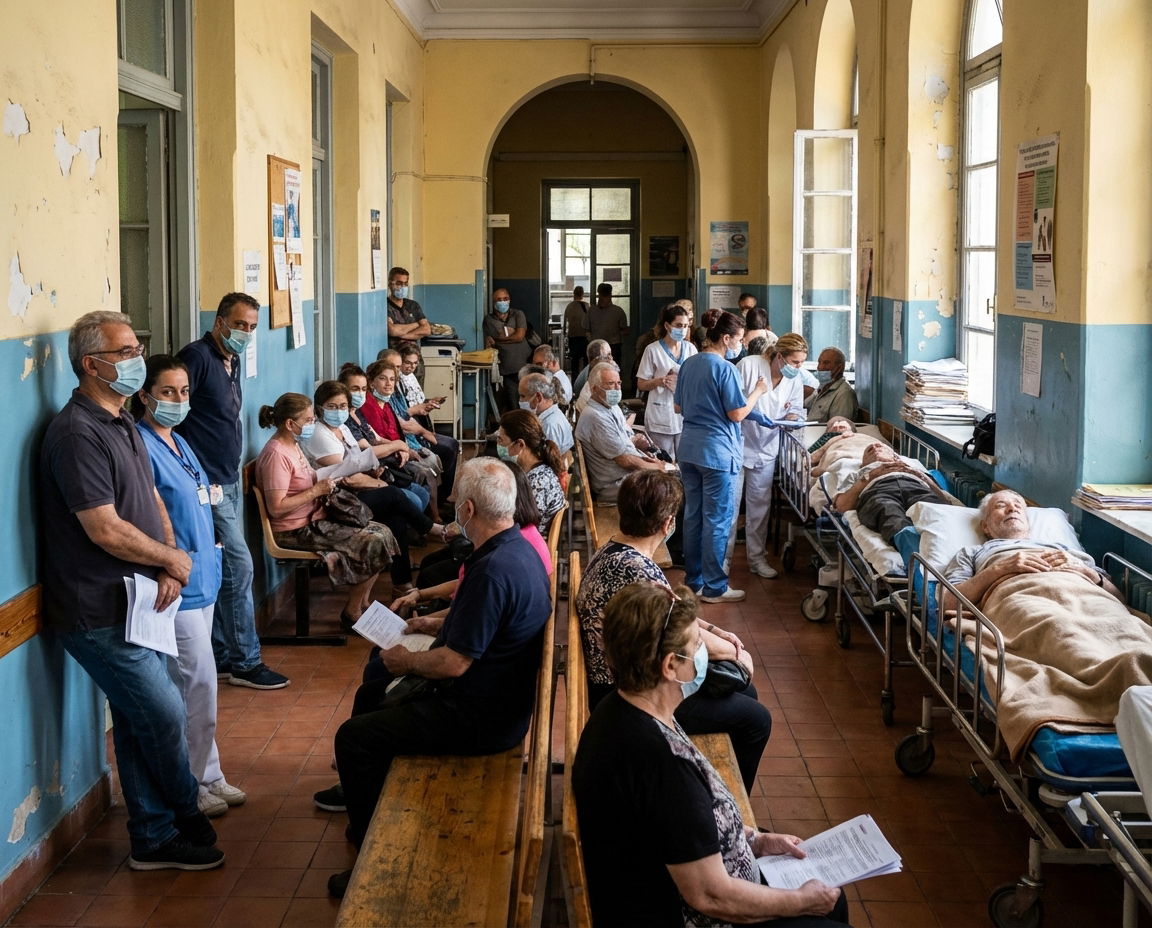
Crowded hospital waiting area showing the pressure on the system.
Where Private Money Goes
Medicines absorb the largest share of private healthcare spending, totaling 2.8 billion euros in 2022. This amount accounts for 42.4 percent of overall private medical expenses and places Greece 2nd in Europe for out of pocket spending on pharmaceuticals.
2.825 billion euros for medicines
2.083 billion euros for outpatient services
990 million euros for hospital care
The State of Public Hospitals
Inside public hospitals, the challenges become even clearer. According to the national federation representing hospital workers, 35 percent of ICU beds remain closed because staffing is insufficient. Patients can wait up to 12 months for surgery, and hallway beds have become a familiar sight. The system is short by about 20,000 healthcare workers.
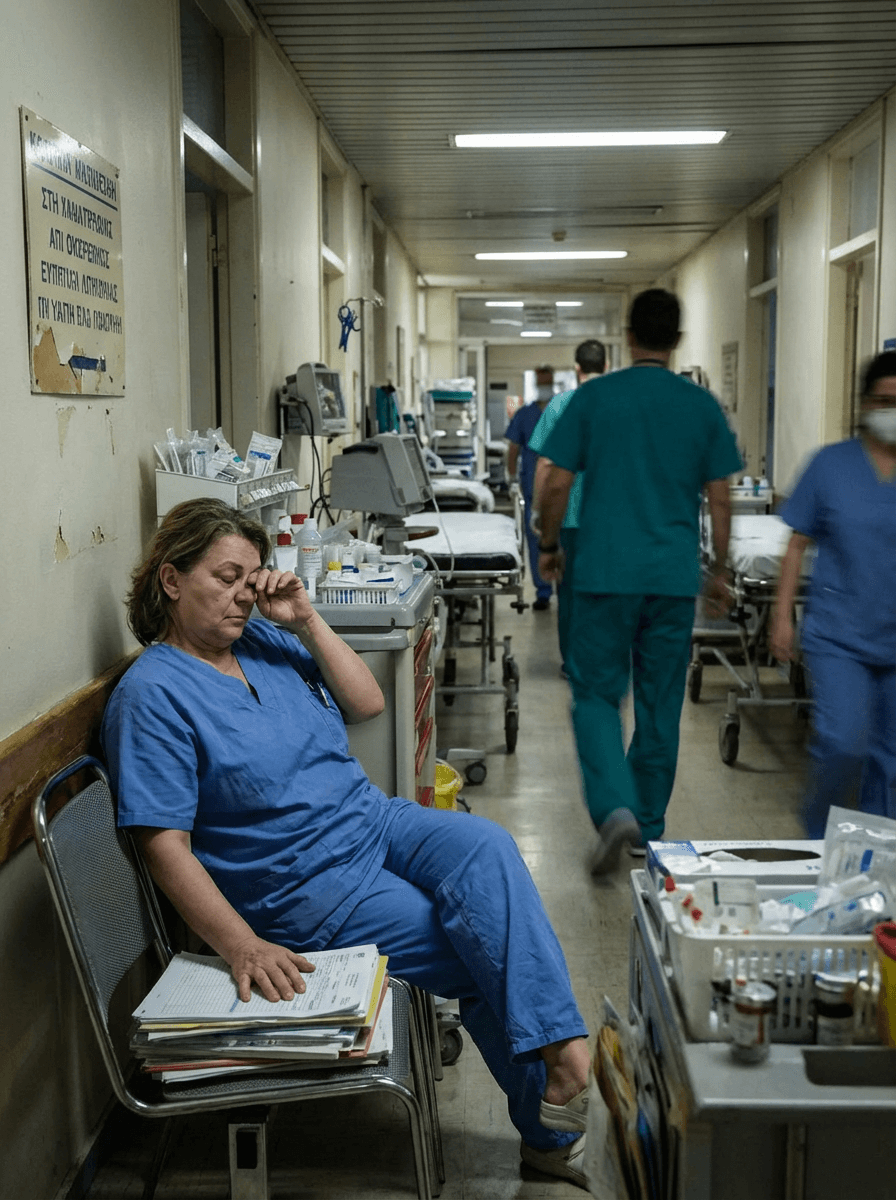
Healthcare staff under heavy pressure due to widespread shortages.
A Decade of Cuts and Continuing Strain
Between 2009 and 2019, during the memorandum years, public health spending fell by 23 percent, a reduction of 1.4 billion euros. Today, half of public healthcare funding, roughly 5.6 billion euros, cycles back to the state through clawback and rebate mechanisms.
In 2023 alone, pharmaceutical spending increased by 1 billion euros, covered entirely by clawback payments from pharmaceutical companies. Hospital funding of about 1.5 billion euros also returned to the state via clawback.
The Growing Financial Burden on Citizens
Greece ranks among the countries with the highest private healthcare expenditure in the EU. Private payments make up 34.7 percent of total healthcare spending, and direct household out of pocket payments represent 17.9 percent of all spending. Only Bulgaria and Latvia impose a heavier burden on citizens.
Across the EU, households spend the largest share of direct payments on medicines, followed by dental services at 32 percent and medical products such as eyeglasses and bandages at 11 percent.