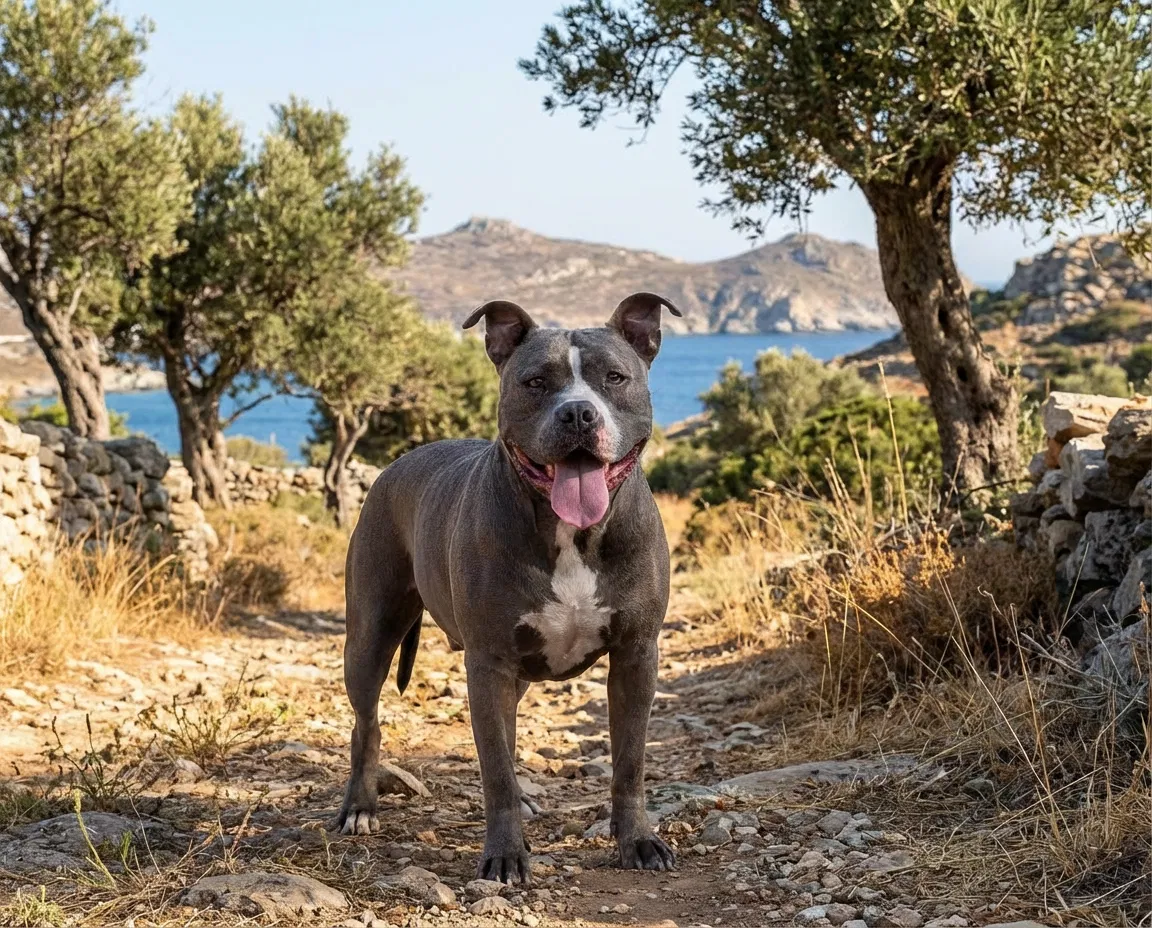

Experts Deliver Findings on Pit Bull That Killed Toddler in Zakynthos
Veterinary specialists at DIKEPAZ have submitted an extensive report to municipal authorities in Zakynthos regarding the pit bull involved in the fatal attack on a 2 year old boy earlier in December. Municipal officials will now convene a 5 member committee, as required by law, to determine whether the animal should be euthanized.
Experts highlight that the dog’s unknown background poses a major obstacle to assessing its temperament with confidence. Uncertainty over its lineage, previous ownership and early life conditions leaves veterinarians without critical insight into the animal’s socialization during its formative months from 3 to 12 weeks of age and again during adolescence from 6 to 18 months. The report stresses that these developmental periods shape behavioural traits that later define a dog’s responses to stress, fear or environmental pressure.
Veterinarians describe the dog as unpredictable, unsafe and potentially dangerous due to the absence of reliable historical context combined with inconsistent behavioural reactions observed during monitoring. Observations indicate alternating responses, with the dog showing tolerance during repeated examinations but also demonstrating sudden defensive or aggressive behaviour when exposed to abrupt movements or increased pressure.
A parallel behavioural assessment from the Panhellenic Association of Dog Trainers concludes that the animal exhibits mild anxiety fear tendencies tied to incomplete socialization and environmental stress. Evaluators noted no aggression in controlled environments while also reporting heightened reactivity to sudden stimuli or rapid motion.
Both expert analyses underline that no assurance can be given regarding the dog’s future behaviour, particularly under stressful or fearful conditions. The lack of background information compounds the risk, making it impossible to rule out another severe incident.
The next procedural step requires the municipality to assemble a 5 member committee to assess whether euthanasia is justified. Legal provisions stipulate that the decision must be unanimous to proceed. If unanimity cannot be reached, the case automatically transfers to a 3 member veterinary committee, which may decide by majority vote.
If either committee approves euthanasia, the law mandates a public posting period of 30 days. During this interval the dog remains eligible for adoption despite the ruling, allowing any concerned individual the opportunity to assume responsibility for the animal.