
Greece Moves to ICS Framework in a Major Civil Protection Reform
Greece is implementing the internationally recognized Incident Command System to modernize the National Civil Protection Mechanism and strengthen its ability to manage wildfires and natural disasters. A new bill titled Active Battle establishes 13 Regional Incident Operations Centers designed to improve coordination and ensure a unified operational picture nationwide.
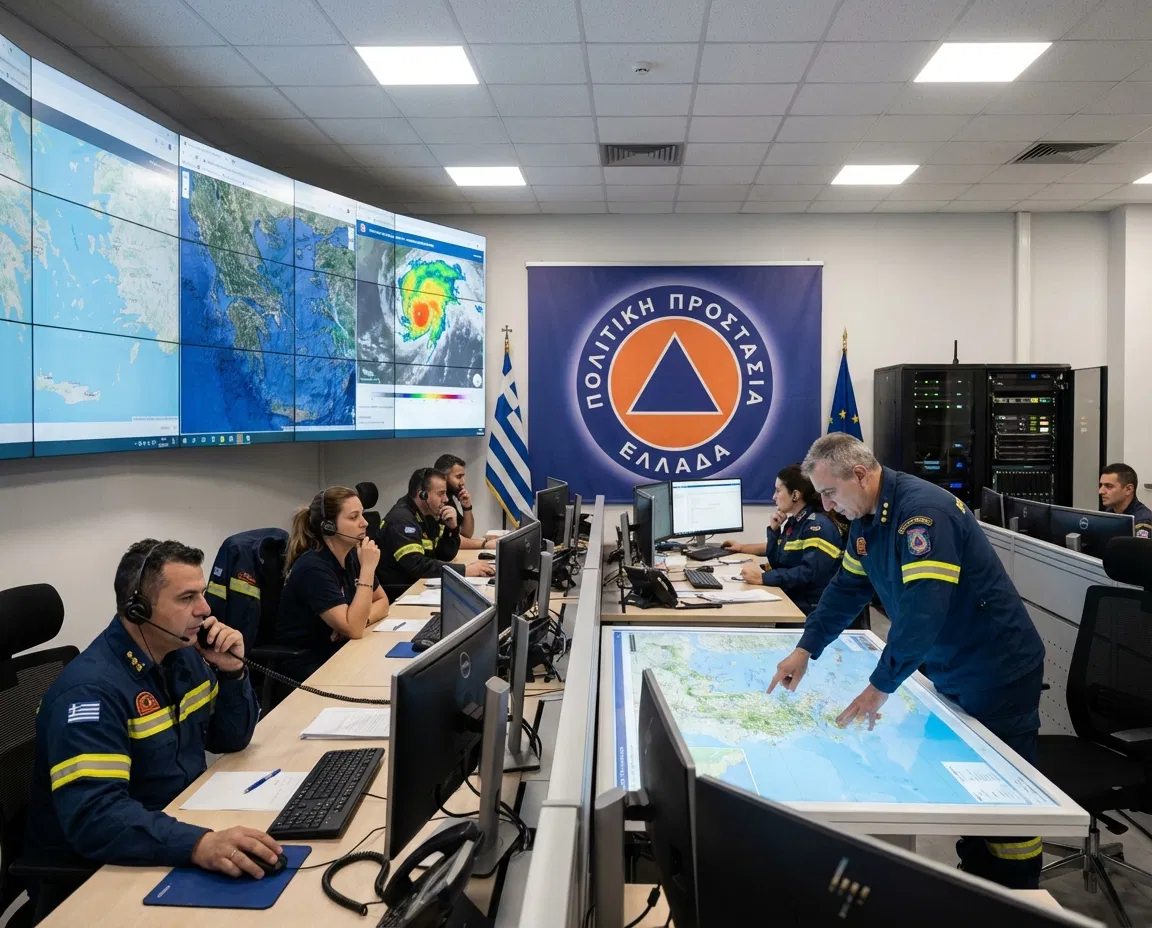
Each regional fire service administration will operate its own Incident Operations Center directly connected to the National Coordination Center, enabling real time information flow and faster decision making during emergencies. The reform introduces standardized command and response protocols inspired by decades of ICS implementation in the United States and Canada.
The government aims to unify planning, align operational procedures, and integrate strategic, operational, and tactical command structures throughout the civil protection system. These new centers will serve as hubs for coordination and communication, equipped with communication systems, satellite mapping tools, and technical support to assist rapid assessment of field conditions.
Permanent representatives from SOPP, PESOPP, TESOPP, NGOs, and registered volunteer organizations will be stationed at the centers to ensure seamless collaboration among all actors. This approach is intended to eliminate past coordination failures, accelerate decision making, minimize conflicting orders, strengthen personnel and public safety, and support transparent public communication.
How the New Incident Operations Centers Will Work
The centers will form a nationwide network that links regional operations with the national command structure, creating a unified system based on international best practices. Each center will operate under the principle of one incident one command and function as a regional war room where state agencies, volunteers, and civil protection bodies coordinate their response.
The design draws inspiration from Incident Command Posts in the United States and Canada as well as operational command rooms in Italy. The reform elevates field command from an improvised practice to an institutionalized mechanism and anchors it as a core operational tool for the National Civil Protection Mechanism.
The government expects that this shift will speed up decision making, reduce contradictory orders, enhance safety for responders and citizens, and ensure that public communication follows a single authoritative source.
The ICS Model and Its Application in Greece
The Incident Command System is a globally established standard for managing all hazard events, offering a unified structure for agencies handling natural, technological, or complex emergencies. Its goal is to ensure a common operational language, streamlined command hierarchy, and clear distribution of roles among all stakeholders.
ICS implementation in Greece will follow a 3 tier model that includes a strategic level at the National Coordination Center, an operational level through the new regional centers, and a tactical level through on site command elements connected with mobile units such as Olympos.
The approach extends to other crises managed by the National Mechanism and includes the development of Common Operational Protocols to guide multi agency responses. The new bill also introduces unified operational rules, rules of engagement, mobilization procedures, and command structures for the Fire Service and all participating agencies.
A Transition to a Modern Incident Management System
Greece plans to transition to a contemporary, internationally recognized incident management model through institutional adoption of ICS principles. The reform aims to correct long standing coordination gaps, improve the quality and speed of decisions, and establish a shared operational approach for all major emergencies.
The new structure is expected to ensure that every significant incident is addressed with a single plan, a unified command, clearly defined responsibilities, and consistent communication across the entire civil protection chain.