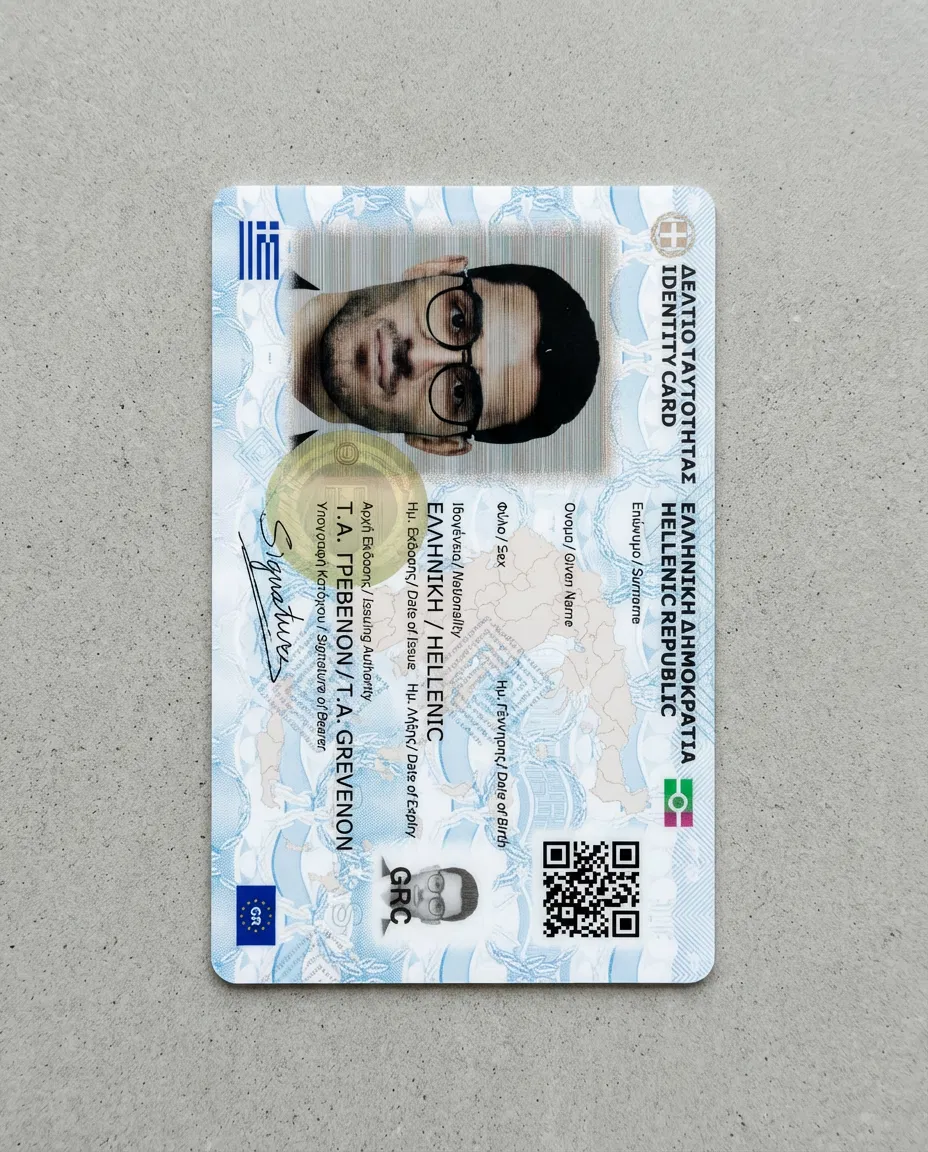

New Greek ID Cards Introduce Modern Security and Mandatory Renewal
The latest Greek ID cards now come with an expiration date, transforming a once lifelong document into one that requires periodic renewal. The updated format enhances security while also imposing a new responsibility on citizens, who must inform key institutions once they receive their upgraded card. The shift aims to prevent service disruptions across financial, insurance, and utility providers.
The redesigned cards adopt the dimensions of a credit card and integrate advanced security features. Citizens receive a high resolution color photograph that includes biometric elements, while an RFID chip and QR code support quick and secure verification without enabling any location tracking. Clear issue and expiry dates ensure that the document is easier to manage in everyday use.
Why an Expiration Date Was Added
The introduction of an expiry date focuses on strengthening data protection and improving the flow of transactions with banks, public bodies, and private companies. The update aligns Greece with EU security standards and reinforces the reliability of national identification documents.
Steps to Take After Receiving the New ID
Once the new card is in hand, citizens must update their information with organizations they interact with. This helps avoid complications in payments, banking procedures, contracts, and standing orders.
Which Institutions Require Updated Information
Banks: Update details via online banking or in branch.
Employer: Provide a copy of the new ID to the HR or payroll department.
Insurance companies: Update information for car, health, home, or life policies.
Mobile and internet providers: Refresh account data online or at a store.
Utility companies: Notify electricity, water, or gas providers when the ID is linked to recurring payments.
Payment apps: Upload updated ID information to platforms such as Viva Wallet or Revolut.
Automatic Updates for Public Services
The Greek Police automatically inform the National Population Register once a new ID is issued. Connected public services receive the updated data instantly, eliminating the need for citizens to appear in person.
How the Issuance Process Works
The process begins with booking an online appointment through id.gov.gr. Applicants select an issuing authority based on their residence and an available date. Required information is pulled automatically from the National Population Registry and the National Communication Register. Appointments can be modified or canceled up to 1 hour before the scheduled time.
Lost or stolen cards must be reported immediately to the issuing authority to ensure proper handling.
Cost of Issuance
The total cost includes a €10 e paravolo (€5 for large families) and a €0.50 police stamp. All fees must be paid before arriving at the police station.
Photograph Requirements
A certified photographer must take the ID photo and upload it to myphoto.gov.gr. Citizens receive a personal code linking the image to their tax number, and the photograph remains available for 12 months for use in other state procedures.
The issuance process is also available through Citizen Service Centers (KEP) for individuals without TAXISnet access, those lacking digital skills, and minors.
The Personal Number System
The Personal Number serves as a unified identification code for all interactions with public services, replacing multiple older identifiers. It consists of 3 alphanumeric characters combined with the citizen’s tax number.
Beginning 3 June 2025, the Personal Number appears on all new IDs and is incorporated into the digital ID stored in the Gov.gr Wallet. Users can view their number via the myinfo.gov.gr application.
The updated system aims to deliver faster, safer, and simpler public service interactions, bringing Greece in line with European identification standards.